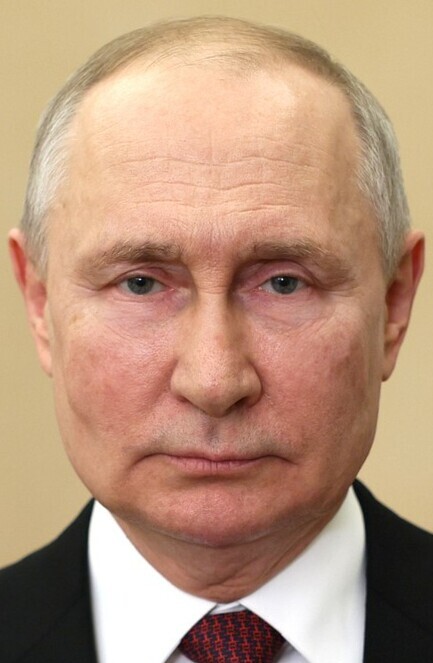
The rise and consolidation of Vladimir Putin's power in Russia does not represent a simple phenomenon of regional authoritarianism, but constitutes a systemic pathology that acts as a corrosive element for modern liberal democracies. Since his appointment as Prime Minister in 1999, Putin has orchestrated a radical transformation of the Russian Federation, moving from a fragile democratic transition to a neo-imperial regime that uses war, political assassination, and information subversion as primary foreign policy instruments.
Russian strategy, under the current leadership, is inherently based on territorial conquest and destabilization of the post-war international order, making Russia an actor with whom long-term trust is impossible to establish. This analysis examines the evolution of "Putinism" as a power system that intertwines kleptocratic interests and imperial ambitions, outlining why a coordinated and severe international reaction represents the only way to neutralize the Russian threat.
On March 17, 2023, the International Criminal Court (ICC) issued an arrest warrant against Vladimir Putin for war crimes related to the illegal deportation of Ukrainian children. This historic warrant — the first ever issued against the leader of a permanent member of the UN Security Council — represents a turning point in documenting the criminality of the regime. In June 2024, the ICC extended warrants to Russian military leaders, including Sergei Shoigu and Valery Gerasimov, for deliberate attacks against civilian targets.
The Warlike Architecture of Putinism: A Chronology of Conquest
Russian foreign policy under Putin has been characterized by constant recourse to military force to redraw borders and limit the sovereignty of neighboring states. The Kremlin has developed an intervention model that begins with provoking ethnic or separatist tensions, followed by direct or proxy intervention under the pretext of "protecting Russians." This dynamic is visible in an uninterrupted series of conflicts that have transformed Russia's "near abroad" into a zone of permanent instability.
The Genesis of Power: The Chechen Wars
Putin's power was forged in the blood of the Second Chechen War (1999-2009). While the first war (1994-1996) had ended with a humiliating Russian retreat, Putin used the invasion of Dagestan by militants and the Moscow apartment bombings to launch an annihilation campaign. The brutality of this conflict established the regime's modus operandi: disproportionate use of force against civilian targets, total destruction of urban centers like Grozny, and installation of puppet regimes based on terror, such as that of Ramzan Kadyrov.
The Georgia Model (2008) and the Aggression Against Ukraine
The invasion of Georgia in August 2008 represented the first case of Russian aggression against a sovereign post-Soviet state to prevent its integration into Western institutions. Using the strategy of "passportization" (massive distribution of Russian passports to foreign citizens to justify military protection), Russia occupied Abkhazia and South Ossetia, demonstrating that international borders are, for the Kremlin, purely optional.
This model was elevated to a system with the aggression against Ukraine. After the Revolution of Dignity in 2014, Russia responded with the illegal occupation of Crimea and the launch of a proxy war in Donbas. The full-scale invasion of February 24, 2022 is the logical conclusion of an ideology that denies Ukraine the right to exist as an independent nation.
Chronology of Russian Military Conflicts (1992-2025)
| Conflict | Period | Strategic Objective | Result |
|---|---|---|---|
| Transnistria | 1992-1993 | Block Moldova-Romania unification | Permanent puppet state |
| Abkhazia | 1992-1993 | Destabilize Georgia | De facto occupation |
| First Chechen War | 1994-1996 | Suppress independence movement | Russian humiliation |
| Second Chechen War | 1999-2009 | Putin power consolidation | Kadyrov regime |
| War in Georgia | 2008 | Prevent NATO entry | Ossetia occupation |
| War in Syria | 2015-present | Mediterranean projection | Assad salvation |
| War in Ukraine | 2014-present | Destruction of Kyiv sovereignty | Ongoing global crisis |
The Security State: Political Assassinations and "Wet Affairs"
A fundamental pillar of Putin's control is the physical elimination of opponents, both inside and outside Russia. The use of so-called "wet affairs" (a Soviet term for executions) has become a routine instrument for Russian security services (FSB, GRU). These operations aim not only to remove the inconvenient individual but serve as a performative act to signal the regime's impunity and its ability to strike anywhere in the world.
Poison Technology and Extraterritorial Reach
The use of highly toxic and traceable substances, such as Polonium-210 or the Novichok nerve agent, indicates a clear state signature. The assassination of Alexander Litvinenko in London in 2006 and the attempted murder of Sergei Skripal in Salisbury in 2018 are examples of state terrorism conducted on the soil of sovereign nations. GRU unit 29155 has been identified as the operational arm for these sabotage and assassination activities throughout Europe.
The Navalny Case: The Assassination of the Main Opponent
On February 16, 2024, Alexei Navalny died in the "Polar Wolf" penal colony in the Russian Arctic, where he was serving a 19-year sentence. The opposition leader, who was 47 years old, had already survived a Novichok poisoning in 2020, confirmed by laboratories in Germany, France, and Sweden and by the Organisation for the Prohibition of Chemical Weapons (OPCW).
Navalny's widow, Yulia Navalnaya, stated in September 2025 that two independent laboratories concluded that her husband was poisoned shortly before his death. According to the human rights organization Gulagu.net, an official report indicates that several cameras in the penal colony were inactive on February 16, and that FSB agents had arrived at the prison on February 14, disabling audio and video monitoring equipment. Bruises were found on Navalny's body that the medical examiner reportedly received instructions to attribute to post-mortem events.
"Navalny was murdered. We don't yet know how we will continue to live, but together we will think of something." — Maria Pevchikh, director of Navalny's Anti-Corruption Foundation
Partial List of Regime Victims (1997-2024)
| Victim | Date | Method | Location | Role |
|---|---|---|---|---|
| Anna Politkovskaya | 2006 | Firearm | Moscow | Critical journalist |
| Alexander Litvinenko | 2006 | Polonium-210 | London | Former FSB agent |
| Sergei Magnitsky | 2009 | Torture | Prison | Tax lawyer |
| Boris Nemtsov | 2015 | Firearm | Moscow | Opposition leader |
| Alexei Navalny | 2024 | In custody | Arctic | Opposition leader |
War Crimes and Genocide: The Deportation of Ukrainian Children
One of the most chilling aspects of Russian aggression in Ukraine is the systematic deportation of Ukrainian children to Russia. The ICC arrest warrant against Putin and Maria Lvova-Belova, Commissioner for Children's Rights, is specifically based on this war crime.
Ukrainian authorities have verified the identity of over 19,546 deported children, actively compiling and updating data through the online platform "Children of War." Russian authorities have stated that over 700,000 Ukrainian children were "transferred" by mid-2023, and the Ukrainian Commissioner for children's rights believes the actual number may be in the hundreds of thousands.
The Parliamentary Assembly of the Council of Europe (PACE) recognized in April 2023 that the documented evidence of this practice corresponds to the international definition of genocide. Deported children are subjected to a "russification" process through re-education in Russian language, culture, and history. They are forbidden to speak Ukrainian, are exposed to propaganda, and are taken to "patriotic" sites or subjected to military training.
In December 2025, the UN General Assembly adopted a resolution calling for the immediate, safe, and unconditional return of all Ukrainian children deported or forcibly transferred. The resolution was adopted with 91 votes in favor, 12 against, and 57 abstentions.
"Every vote for the resolution is support for lies, war, and confrontation." — Russian Ambassador Maria Zabolotskaya (demonstrating the regime's absolute lack of accountability)
The Legislative Labyrinth: The Suppression of Civil Liberties
Beneath the surface of physical violence, the Kremlin has constructed a "liberty-killing" legislative apparatus aimed at suffocating any form of dissent and independent civil society activity. Since 2012, a cascade of laws has created an environment in which any criticism of the government can be criminally prosecuted.
The "Foreign Agents" Law
The pillar of this repression is the "foreign agents" law, originally introduced to target NGOs receiving foreign funding. Over time, the definition has been expanded to include any individual or entity that is simply under "foreign influence." This led to the liquidation of Memorial, Russia's oldest human rights organization, awarded the Nobel Peace Prize, accused of failing to properly label its publications as foreign agent material.
War Censorship and Repression
Following the 2022 invasion of Ukraine, Russia introduced "war censorship" laws that punish the dissemination of "false information" about the armed forces with sentences of up to 15 years in prison. In parallel, the regime has intensified the use of anti-extremism laws to target religious minorities such as Jehovah's Witnesses. The LGBT movement has also been classified as an "extremist organization," making any form of civil rights activism illegal.
Information Warfare and Subversion of Western Democracies
Putin's Russia perceives the very existence of prosperous democracies on its borders as an existential threat to its autocratic model. To counter this threat, the Kremlin has launched a "new generation warfare" that uses disinformation to erode Western citizens' trust in their own institutions.
The Disinformation Infrastructure
According to the third EEAS (European External Action Service) Report on FIMI (Foreign Information Manipulation and Interference) threats, Russia conducted information manipulation operations in 2024 targeting over 90 countries. In 2025, the Russian government plans to allocate at least 137.2 billion rubles (approximately €1.18 billion) to state media and platforms.
The Social Design Agency (SDA), a Moscow agency linked to the Kremlin, coordinates influence campaigns throughout Europe. Internal documents leaked in 2024 revealed that the SDA's "Russian digital army" generated 33.9 million comments in the first four months of 2024, producing 39,899 "content units" on social media, including 4,641 videos and 2,516 memes and graphics.
Precise quotas are established. For example, in a project targeting Germany and France, the quotas were: "Cartoons – 60 units. Memes – 180 units. Article comments – 400." The leaked documents include hundreds of examples of memes created by cartoonists employed by the SDA.
Strategic Objectives of Disinformation
An internal SDA document states: "European Parliament elections are in summer 2024. Critical milestones are approaching in 2024, including Bundestag elections and US presidential elections. The outcome of these campaigns will largely determine the West's future sanctions policy toward Russia and support for Ukraine."
The Russians remain optimistic about changing Western public opinion on Ukraine. One document reads: "Public opinion in the project's target countries is gradually shifting toward reducing or completely ceasing support for Ukraine."
The Impact of Sanctions and Economic Isolation
Western sanctions against Russia represent the most extensive sanctions regime ever imposed on a major economy. As of January 2024, over 16,000 restrictions have been imposed on Russian individuals and entities, making Russia the most sanctioned country in the world.
Frozen Assets and Financial Losses
- Approximately $285 billion in Russian Central Bank foreign exchange reserves are immobilized in EU and G7 countries
- €210 billion in Russian sovereign assets are frozen in EU jurisdiction, mainly at Euroclear in Belgium
- £28.7 billion in Russia-linked assets have been frozen in the UK since 2022
- The Western coalition has deprived Russia of more than $500 billion that could have been allocated to the war effort
Signs of Economic Strain
The first signs of economic stress appeared at the end of 2024. The ruble has lost more than half its value against the US dollar and euro. Russian oil exports fell to $64.40 per barrel at the end of 2024. Inflation is causing concern: in his annual televised Q&A session, Putin admitted that inflation is a problem and that the Russian economy is "overheated."
The World Bank forecasts that Russian GDP will grow only 0.9% in 2025 (reduced from the previous 1.4%), 0.8% in 2026, and 1% in 2027. Russian energy revenues, primarily from oil, decreased by 20% year-on-year in the first nine months of 2025.
The Siloviki Kleptocracy: How State Plunder Finances the Empire
The Russian economy is not managed according to market principles but as a kleptocratic structure where political loyalty is exchanged for access to plundering state resources. Putin replaced the chaotic oligarchy of the 1990s with a system dominated by the siloviki (men of the security apparatus), who control the vital nodes of the economy through state companies like Rosneft and Gazprom.
In this system, property rights are purely conditional. Oligarchs can maintain their wealth only as long as they serve the Kremlin's interests. Anyone who attempts to act independently suffers asset seizure through the mechanism of reiderstvo (corporate raids orchestrated by corrupt officials and compliant magistrates). Corruption is not a malfunction but the "lubricant" of the system: every official is involved in illicit schemes, making them vulnerable to blackmail (kompromat) and therefore perfectly loyal.
The Myth of "Russkiy Mir" and the Neo-Imperial Drift
At the center of Putin's rhetoric is the doctrine of Russkiy Mir (Russian World), an ideological construct that justifies territorial expansion as a civilizing mission. According to this vision, Russia is not a nation-state within the 1991 borders but a "center of civilization" that has the right to control all territories where Russian is spoken or Russian Orthodoxy is practiced.
This ideology fuses elements of Pan-Slavism, Eurasianism, and Orthodox theocracy. Patriarch Kirill has provided moral justification for the invasion of Ukraine, describing it as a "metaphysical struggle" against the forces of evil. This approach makes any diplomatic agreement with Russia inherently fragile, since the regime does not recognize the legitimacy of the international order based on state sovereignty.
Strategic Recommendations: Neutralizing the Russian Threat
Given the inherently aggressive nature of the Russian regime, the international community must adopt a "total containment" strategy aimed at depriving Russia of the means to project power. The objective must be not only the end of the war in Ukraine but the permanent reduction of Russia to a marginal actor in the global economy.
Economic Isolation and Asset Seizure
- Seizure of Sovereign Reserves: The approximately $300 billion in Russian Central Bank assets frozen in the West must be permanently confiscated to finance Ukraine's reconstruction
- Total Energy Decoupling: Europe must complete the transition to alternative sources, making Russian exports irrelevant
- Secondary Sanctions: Severely target entities in third countries (China, India, Turkey) that help Russia evade controls
- Technology Control: Prevent Russian access to any high-level technology (AI, semiconductors, Arctic exploration)
Conclusions
Vladimir Putin's policy and the power system he has created represent an existential threat to democratic civilization. Through a combination of military aggression, internal terror, and external subversion, the Kremlin has demonstrated that there can be no stable peace as long as this regime remains capable of projecting its force.
Russia has deliberately chosen to abandon the path of European integration to pursue an anachronistic and violent imperial dream. The West's response must be proportionate to this challenge: no longer a search for compromise, but a strategy of economic and political neutralization that returns Russia to its natural dimension as a commodity exporter, isolated and unable to harm free nations.
Only through systematic isolation and deprivation of technological resources will it be possible to break the cycle of imperial violence that has characterized Russia over the past two decades and protect the future of modern democracies.
Bibliography and Sources
Institutional Sources
- International Criminal Court (ICC). "Situation in Ukraine." https://www.icc-cpi.int/situations/ukraine
- European External Action Service (EEAS). "3rd Report on Foreign Information Manipulation and Interference Threats." March 2025. https://www.eeas.europa.eu
- Council of the European Union. "Impact of sanctions on the Russian economy." https://www.consilium.europa.eu
- European Parliament. "Motion for a Resolution on Russiagate." B9-0128/2024. https://www.europarl.europa.eu
- UN General Assembly. "Return of Ukrainian children." Resolution A/ES.11/L.16/Rev.1. December 2025.
- House of Commons Library (UK). "Sanctions against Russia: What has changed in 2025?" December 2025. https://commonslibrary.parliament.uk
Think Tanks and Research Centers
- Atlantic Council. "Is 2025 the year that Russia's economy finally freezes up under sanctions?" January 2025. https://www.atlanticcouncil.org
- Center for Strategic and International Studies (CSIS). "How Sanctions Have Reshaped Russia's Future." February 2025. https://www.csis.org
- CEPA (Center for European Policy Analysis). "Russia the Winner as ICC Descends Into Chaos." December 2024. https://cepa.org
- CEPR (Centre for Economic Policy Research). "Russia's missing payments." 2025. https://cepr.org
Media and Investigative Journalism
- VSquare.org. "Leaked Files from Putin's Troll Factory: How Russia Manipulated European Elections." September 2025. https://vsquare.org
- The Moscow Times. "Russia Jails ICC Judges, Prosecutor in Absentia." December 2025. https://www.themoscowtimes.com
- CBS News. "Alexei Navalny was poisoned before dying in Russian prison, his widow says." September 2025. https://www.cbsnews.com
- Al Jazeera. "Alexey Navalny timeline: From poisoning to prison to death." February 2024. https://www.aljazeera.com
- NPR. "Alexei Navalny is the latest Putin critic to die in suspicious circumstances." February 2024. https://www.npr.org
- Zona Media. "15 years for a warrant: Moscow court sentences ICC leadership." December 2025. https://en.zona.media
- Euronews. "Deported Ukrainian children are Russia's future army recruits, ombudsman says." November 2024. https://www.euronews.com
Human Rights Organizations
- Amnesty International. "Russia: Prisoner of conscience Aleksei Navalny dies in custody." February 2024. https://www.amnesty.org
- Council of Europe/PACE. "The forcible transfer and 'russification' of Ukrainian children shows evidence of genocide." April 2023. https://www.coe.int
Additional Resources
- Wikipedia. "International Criminal Court arrest warrants for Russian leaders." https://en.wikipedia.org
- Wikipedia. "Child abductions in the Russo-Ukrainian War." https://en.wikipedia.org
- Wikipedia. "War crimes in the Russian invasion of Ukraine." https://en.wikipedia.org