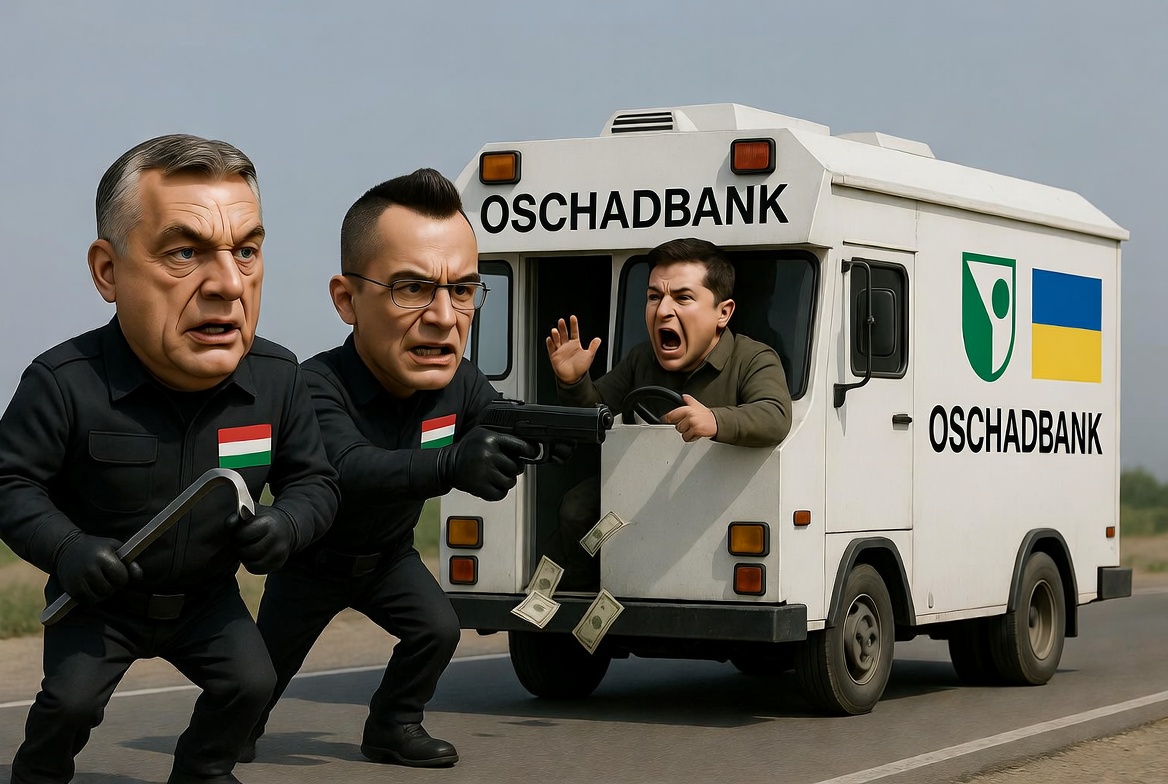
March 23, 2026 marks a watershed date in the history of European integration. The Washington Post revelations confirm what analysts and diplomats had suspected for years: Viktor Orbán's Hungarian government has systematically transferred to the Kremlin classified information discussed in European Union Councils, turning Moscow into an invisible participant at the continent's decision-making tables. We are not facing a diplomatic exception, but the actions of a genuine collaborationist – the most dangerous Europe has known since the end of the Second World War.
The Day of Truth: The Revelations of 23 March 2026
Europe woke up today, 23 March 2026, with the formal certainty of what its geopolitical instinct had been suggesting for some time. The revelations published by the Washington Post and immediately taken up by Politico, Euronews and the entire international press, describe a mechanism of institutional betrayal unprecedented in the history of the European Union. Hungarian Foreign Minister Péter Szijjártó, Viktor Orbán's right-hand man, had for years used the breaks in European Union Councils to call his Russian counterpart Sergey Lavrov, providing him with real-time operational accounts of what was being discussed behind closed doors. Negotiating positions of individual leaders, sanction strategies being elaborated, possible compromises: everything was transmitted to Moscow with the punctuality of an intelligence bulletin.
A European security official summed up the gravity of the situation with a phrase that will remain in the continent's diplomatic history: for years, every single EU meeting has essentially had Moscow sitting behind the table. The statement is not rhetorical. It is the technical description of a breach in European institutional security that transformed the Union's most confidential deliberations into a transparent arena for the continent's number one enemy.
The European Commission reacted today with words that, in the normally diplomatic language of the institutions, amount to an indictment: it declared that reports about the alleged transfer of classified information to the Russian government are gravely concerning, calling on Budapest to provide immediate clarifications. The EU Council confirmed it is in the assessment phase to determine whether Szijjártó violated specific rules. Polish Prime Minister Donald Tusk used plain language: the news should surprise no one, he wrote, because suspicions about Orbán and his men have persisted for a long time.
Anatomy of a Betrayal: The Szijjártó-Lavrov Channel
To understand the scale of this collaborationist operation, it is necessary to analyse not only the phone contacts, but the entire ecosystem of submission that Budapest has built towards Moscow. Since the start of Russia's large-scale invasion of Ukraine in February 2022, Szijjártó has made sixteen official trips to Moscow, the last of which on 4 March 2026, when he met Vladimir Putin directly. Sixteen times in four years: a frequency that has no equivalent among the foreign ministers of any other EU or NATO member state. These are not emergency diplomatic channels or mediation efforts: this is the ritual pilgrimage of a vassal rendering account to his lord.
Former Lithuanian Foreign Minister Gabrielius Landsbergis revealed today a detail that sheds light on Europe's collective awareness: already in 2024 he had been warned of the existence of the privileged channel between Szijjártó and Lavrov, and that he and his colleagues should limit the sharing of information in the presence of the Hungarian delegation. Even on the eve of the crucial NATO summit in Vilnius in 2023, diplomats had deliberately excluded Budapest from discussions on sensitive matters. Five European diplomats confirmed to Politico that the news did not surprise them, but that an official response would depend on the outcome of the Hungarian elections on 12 April.
The cyber dimension of the betrayal adds a further layer of gravity. Ferenc Fresch, former head of Hungary's Cyber Defence Service, revealed that Russian hackers linked to Kremlin intelligence services had maintained persistent access for years to the computer networks of the Hungarian Foreign Ministry. This infiltration gave Moscow a window not only into Hungary's bilateral communications, but into the entire ecosystem of preparatory documents and classified communications circulating among European capitals. The fact that such vulnerabilities were known and that the government took no action to eradicate them constitutes a functional complicity, a 'collaborative neutrality' that transformed Hungary into an open door to the West's secrets.
Table 1: Chronology of Orbán-Kremlin Collaborationism (2022–2026)
| Period | Action | Strategic Impact |
|---|---|---|
| Feb 2022 – Mar 2026 | 16 official trips by Szijjártó to Moscow | Permanent political coordination outside EU channels |
| 2022 – 2025 | Lavrov-Szijjártó phone calls during EU Councils | Russian real-time access to classified deliberations |
| 2023 – 2025 | Blocking of €6.5 billion European Peace Facility | Paralysis of military support to Kyiv |
| 4 March 2026 | Szijjártó-Putin meeting at the Kremlin | Pre-electoral consultation with the enemy |
| 5 March 2026 | Seizure of Oschadbank assets ($82 million) | State banditry and geopolitical blackmail |
| 23 March 2026 | EU exclusion from sensitive formats | Diplomatic isolation of Budapest |
The Scum of Europe: The Collaborationist and His Acolytes
There exists a point beyond which diplomacy ceases to be a useful instrument and becomes complicity. Europe has reached and far exceeded that point with Viktor Orbán. For sixteen years, the Hungarian prime minister has systematically eroded from within every pillar on which the European project rests: the rule of law, solidarity among peoples, the capacity for a united response to external threats. He has done all this not as an ideological dissident operating in the open, but as an institutional parasite feeding on cohesion funds, NATO security and single market freedoms, while delivering the continent's secrets to the power that seeks its disintegration.
In light of today's facts, it is no longer possible to use euphemisms. Orbán is not a "pragmatic" leader pursuing national interests through unorthodox methods. He is not the Union's "enfant terrible" playing the outsider's role. Orbán is a collaborationist, in the fullest and most historically charged sense of the word. Like the Vichy collaborationists who cooperated with the Nazi occupier, like Quisling who served the enemy's interests from the very heart of Norwegian institutions, Orbán has placed the Hungarian state apparatus at the service of Europe's main strategic adversary. The difference is that the contemporary collaborationist does not wear an enemy uniform: he wears the suit of a European premier and sits at the Council's tables with his phone in his pocket, ready to report to Moscow.
Orbán does not act alone. Around him a circle of acolytes has consolidated that deserves the same infamous label. Szijjártó, the minister who calls Lavrov during breaks in European summits, is the operational terminal of this betrayal network. The propagandist Georg Spöttle, photographed with the premier and regularly hosted in Fidesz-aligned media, received talking points directly from the GRU, Russian military intelligence, through officer Oleg Smirnov. The documented flow – GRU officer, Fidesz propagandist, Hungarian media, government – constitutes an information-laundering operation that transforms Kremlin propaganda into purported domestic political debate. They are the scum of Europe: individuals who enjoy the continent's democratic freedoms in order to demolish them from within, in service of a regime that in Russia denies those same freedoms with prison, poisoning and assassination.
Operation "The Gamechanger": When the Kremlin Directs European Elections
The nature of the relationship between Budapest and Moscow reached its most grotesque and at the same time most revealing apex with the discovery of the operation called "The Gamechanger". According to SVR documents, Russia's foreign intelligence service, intercepted by Western services and revealed by the Washington Post, the Kremlin devised a plan to save Orbán from the electoral defeat that polls were projecting for him on 12 April 2026. The plan involved staging a fake assassination attempt against Orbán himself, with the declared aim of shifting the perception of the electoral campaign from the rational terrain of socioeconomic issues to the emotional one, where the dominant themes would become state security and the stability of the political system.
The plan was coordinated at the highest level: Sergei Kiriyenko, first deputy head of the Russian presidential administration, was personally tasked by Putin with managing the Hungarian dossier to prevent a Fidesz defeat that would further isolate Moscow within the EU and NATO. In parallel, the Social Design Agency, an entity already subject to Western sanctions, deployed a massive disinformation campaign through memes, videos and infographics produced in Russia but distributed through a network of local accounts and Hungarian influencers. The strategy envisaged glorifying Orbán as the only statesman capable of defending national sovereignty, demonising his opponent Péter Magyar as Brussels' puppet, and creating an informational siege through apocalyptic AI-generated images showing wounded Hungarian soldiers and destroyed cities.
Here the postulate of contemporary collaborationism emerges in its fullness: Orbán does not merely receive the Kremlin's support passively, but is an integral part of an ecosystem in which Russia invests intelligence resources, propaganda and covert operations to keep its agents of influence in power within Western institutions. The collaborationist does not betray out of weakness: he betrays because his power depends on the support of the hostile power he serves.
State Banditry: The Seizure of Oschadbank Assets
If the leaks to the Kremlin represent the strategic betrayal, the seizure of assets belonging to the Ukrainian state bank Oschadbank is its physical, brutal and almost caricatural manifestation. On 5 March 2026, masked commandos from Hungary's Counter-Terrorism Centre stopped two Oschadbank armoured vehicles in transit from Austria to Ukraine, arresting seven bank employees and seizing forty million dollars, thirty-five million euros and nine kilograms of banking gold, with a total value of approximately eighty-two million dollars. Kyiv clarified that it was a routine transfer between state banks, documented and compliant with all international regulations.
President Zelensky defined the action as an act of banditry. Ukrainian Foreign Minister Sybiha spoke of state terrorism and racketeering. And the facts bore them out in increasingly chilling fashion: according to revelations by The Guardian, Hungarian security forces allegedly administered forced injections of unknown substances to one of the detainees, a former Ukrainian security service official, using methods reminiscent of the worst KGB Soviet practices. The man, a diabetic, suffered a hypertensive episode and fainted, requiring hospitalisation. Blood tests subsequently conducted in Ukraine detected traces of an unidentified substance. The armoured vehicles were returned on 12 March with documented structural damage; the money and gold remain seized in Budapest.
Hungarian Transport Minister János Lázár revealed the true nature of the operation by declaring that the funds would not be returned until Kyiv accepted to restore oil flows through the Druzhba pipeline. In other words, Hungary took Ukrainian sovereign assets hostage to force a country at war to continue facilitating the transit of Russian oil. It is difficult to imagine a clearer demonstration of which master Orbán truly serves. Not Hungary, not Europe: Putin's Russia, and its energy apparatus that finances the war machine responsible for the aggression in Ukraine.
Table 2: Seizure of Oschadbank Assets – Status as of 23 March 2026
| Item | Value/Quantity | Status |
|---|---|---|
| USD Currency | $40,000,000 | Confiscated – held in Budapest |
| EUR Currency | €35,000,000 | Confiscated – held in Budapest |
| Banking gold | 9 kg (9 bars) | Confiscated – and partly "lost" |
| Armoured vehicles | 2 units | Returned on 12 March with damage |
| Personnel | 7 employees | Expelled after 28 hours – abuses reported |
Europe's Unforgivable Acquiescence
The question every European citizen should ask today concerns not only Orbán, but the European Union itself. How was it possible for a member government to operate as an information terminal for a hostile power for years, without EU institutions adopting decisive countermeasures? The answer is as simple as it is bitter: Europe was too accommodating. Too accommodating when Orbán dismantled judicial independence. Too accommodating when he turned public media into propaganda tools. Too accommodating when he blocked for a year €6.5 billion of the European Peace Facility intended to reimburse states supplying weapons to Ukraine. Too accommodating when he defended frozen Russian assets with the same vehemence a lawyer uses to defend his client.
Europe unlocked €10.2 billion in cohesion funds for Hungary despite insufficient rule-of-law reforms, capitulating to the blackmail of a government that used the foreign policy veto as a weapon of extortion. The European Parliament denounced this surrender, but the damage was done: Orbán had validated the model whereby systematic violation of European values can be monetised, and the Kremlin took careful note. Article 7 of the Treaty, which provides for the suspension of voting rights for serious and persistent violation of Union values, remained a dead letter: triggered in 2018, it never produced concrete consequences. Eight years of procedure without results are a monument to the voluntary impotence of a Europe that preferred quiet life to defending its founding principles.
Today, the institutional response consists in creating restricted diplomatic formats – the Weimar Triangle, the Nordic-Baltic Eight, the E3, E4, E7 groups – that effectively exclude Hungary from the discussions that matter. This is a necessary solution in the emergency, but one that reveals the Union's structural paradox: the official meetings of twenty-seven have become little more than ceremonial occasions or theatres for Hungarian vetoes, while real foreign policy is elaborated elsewhere. A European diplomat admitted that 'less than loyal' states are the main reason why relevant European diplomacy now takes place in smaller formats. The euphemism 'less than loyal' is Europe's last tribute – too polite as ever – to a government that should be called by its name: collaborationist.
The Legal Framework: The Court Ruling and Article 7
On 27 January 2026, the Court of Justice of the European Union issued a landmark ruling in case C-271/23, finding that Hungary had violated the principle of sincere cooperation enshrined in Article 4(3) of the Treaty on European Union. Although the specific case concerned a vote against the common position at the UN, the principles established by the Court have direct and devastating implications for the question of leaks to the Kremlin. The Court ruled that member states must refrain from any conduct that may undermine the objectives of the Union, that acting divergently weakens the EU's negotiating power towards third parties, and that a member state cannot justify the violation of Community obligations by claiming that the Union's position is illegitimate.
According to legal experts, the real-time briefings provided by Szijjártó to Lavrov represent the most serious documented violation of the principle of sincere cooperation. If such actions were formally brought before the Court, they could form the basis for the full activation of Article 7, finally leading to the suspension of Hungary's voting rights. Péter Magyar, leader of the Tisza party leading in polls three weeks before the elections, described Szijjártó's behaviour as treason against the homeland, punishable by life imprisonment under Hungarian law. The bitter irony is that while Orbán presents himself as a defender of national sovereignty, it is precisely the sovereignty of Hungary and all of Europe that he has placed in Putin's hands.
The Postulate of the Contemporary Collaborationist
A bitter formula lies hidden in the folds of the human: the sterility of discernment is the fertile ground for the collaborationist, one who, in a single pernicious synthesis, denies scientific reason by rejecting vaccines and climate change, pays homage to the despotic Putin-Trump axis, and disavows the European civilisation that hosts him.
Viktor Orbán perfectly embodies the triple toxicity of the contemporary collaborationist. The first pillar – the rejection of expertise and factual truth – manifests itself in the systematic construction of an alternative reality through the Fidesz media apparatus, which transforms Ukraine from an attacked nation into Hungary's 'enemy', describes Brussels as a conspiracy against Magyar sovereignty, and passes off submission to the Kremlin as a 'peace policy'. The second pillar – adoration of the despotic axis – requires no interpretation: sixteen trips to Moscow, real-time phone calls to Lavrov, SVR operations to save Fidesz's election. The third pillar – disavowal of the civilisation that hosts him – manifests itself in the institutional parasitism of a government that benefits from NATO security, European funds and the single market while systematically operating to paralyse the Union's response to Russian aggression.
Orbán's Hungary has received tens of billions of euros in structural funds from the European Union, funds that built motorways, modernised infrastructure and supported the Magyar economy. In return, Orbán has offered Europe systematic vetoes on aid to Ukraine, protection of Russian financial assets, hospitality to GRU influence channels and the delivery of the continent's diplomatic secrets to Vladimir Putin. This is not political ingratitude: it is active betrayal. It is the behaviour of one who bites the hand that feeds them.
The Alignment Network: Orbán in the Context of Russian Interference
Orbán does not operate in a vacuum. His collaborationism is embedded in a multi-layered network of Russian interference in the European Union that community institutions have identified as a veritable undeclared war against liberal values. The dimension of the phenomenon is impressive: in the first year of the Ukrainian conflict, the disinformation campaign orchestrated by Moscow reached an aggregate audience of at least one hundred and sixty-five million people in the EU, generating no fewer than sixteen billion views.
The influence ecosystem operates through three complementary vectors. The first is financial and corruptive alignment: Marine Le Pen's Rassemblement National received a loan of €9.4 million from Russia in 2013; German AfD candidates Maximilian Krah and Petr Bystron were involved in the Voice of Europe scheme, with illicit payments to spread pro-Kremlin propaganda; MEP Radačovský received payments from Russian sources, going so far as to make appeals for Europe's destruction. The second vector is operational and intelligence alignment: Tatjana Ždanoka, a Latvian MEP, operated for decades as an FSB informant within the European Parliament; Egisto Ott, a former Austrian intelligence officer, sold sensitive data extracted from senior officials' smartphones to the Kremlin through Jan Marsalek, the former Wirecard executive who fled to Russia. The third vector is the legal offensive by oligarchs, who have initiated arbitration proceedings for over fifty-three billion euros against member states to contest the freezing of assets.
In this landscape, Orbán represents something unique and more dangerous: he is not a single recruited agent, nor a politician who has received illicit funding, nor a propagandist on the GRU's payroll. He is a head of state who has placed the entire government apparatus at the service of the Kremlin's interests, transforming an EU and NATO member country into a structural platform for Russian interference. When a single veto can paralyse the entire Union's response to a war of aggression, the collaborationist holding that veto power becomes Moscow's most effective weapon, more lethal than any armoured division.
The Energy Chains: From Paks II to the Oil Blackmail
At the centre of the symbiotic relationship between Budapest and Moscow lies a structural constraint designed to last for decades: energy dependency. The Paks II nuclear project, managed entirely by Russian state company Rosatom, will bind Hungary's energy security to Russia until 2050 through two new 1,200 MW reactors, financed with long-term Russian loans. Russian technology, Russian fuel, Russian maintenance, debt to Moscow: an ecosystem of total dependency. Insider sources revealed that Hungary actively blocked negotiations for an alternative nuclear project with France, deliberately choosing to bind itself to Moscow while refusing diversification.
On the oil front, Szijjártó confirmed that Russia will continue to supply Hungary with approximately five and a half million tonnes of oil per year in 2025–2026. Budapest announced legal action against the European Commission's REPowerEU plan, which envisages a complete cessation of Russian gas imports by autumn 2027. When the Commission proposed, for 15 April 2026, a permanent ban on all Russian oil imports eliminating the exceptions from which Hungary had benefited, Budapest promised a fight. For Orbán, energy dependency on Russia is not a problem to be solved: it is a political pillar that allows him to subsidise domestic tariffs with oil and gas negotiated directly with Putin, maintaining electoral consensus through geopolitical subordination.
12 April 2026: The Possibility of Democratic Redemption
There is, however, in this bleak landscape, a glimmer of hope that Europe should observe with attention and support by every legitimate means. For the first time in sixteen years of Fidesz's unchallenged dominance, polls show that Viktor Orbán could lose the parliamentary elections of 12 April 2026. The Tisza party of Péter Magyar, a former Fidesz establishment member who broke with the system by exposing its corruption, leads in independent polls with an advantage ranging between eight and twenty percentage points among decided voters. Bloomberg described a collapse in Orbán's support; CSIS defined these elections as the most important in Europe in 2026.
Magyar has promised to fight corruption, unlock the billions of frozen European funds, rebuild public services and reaffirm Hungary's role within the EU and NATO. Today, faced with the Washington Post revelations, he described Szijjártó's behaviour as treason against the homeland to be investigated criminally, adding that based on information currently available, the minister is collaborating with the Russians, betraying Hungarian and European interests. It is significant that Orbán's reaction was not a defence on the merits, but an attack: he denounced the wiretapping as a serious attack against Hungary, attempting to turn into a victim the very author of the betrayal.
The Kremlin is perfectly aware of what is at stake. Operation 'The Gamechanger', the Social Design Agency's disinformation campaign, the personal mandate entrusted to Kiriyenko: everything indicates that Moscow considers an Orbán defeat a first-order strategic threat that would deprive the Kremlin of its most reliable bridge at the heart of Europe. This awareness should serve as a mirror for Europe: if Russia invests intelligence resources to keep Orbán in power, it means the Budapest collaborationist has a measurable strategic value for the enemy. And what has value for the enemy is, by definition, a harm to Europe.
Conclusion: Europe Must Choose
March 23, 2026 marks the end of the era of ambiguities. The European Union can no longer afford to treat Viktor Orbán as a difficult but legitimate interlocutor. The facts speak with a clarity that admits no euphemisms: an EU member government has operated for years as an information channel for Europe's main strategic adversary during an armed conflict at the Union's borders. It has seized the sovereign assets of an attacked nation to force it to continue facilitating the transit of Russian oil. It has accommodated SVR operations aimed at manipulating its own elections. It has transformed the right of veto into a geopolitical weapon in Moscow's service.
Orbán and his acolytes are the scum of Europe not because they hold different political views, but because they have consciously chosen to serve the interests of a power that is waging a war of aggression on the continent, that has bombed hospitals and schools, that has deported Ukrainian children, that has assassinated dissidents on European soil. Collaborationism is not an opinion: it is an act. And Orbán's acts speak louder than any declaration.
Europe has two roads before it. It can continue with the acquiescence that has characterised the last sixteen years, hoping the problem will resolve itself with the elections of 12 April. Or it can draw the conclusions that the facts impose: fully activate Article 7, suspend Hungary's voting rights until sincere cooperation is guaranteed, classify sensitive documents to prevent further leaks, and establish that no member state can operate as the enemy's outpost from within the common institutions. History will judge Europe not for the speed with which it discovered Orbán's betrayal, but for the courage with which it knew how to respond. As long as the collaborationist sits at the table, the table itself is compromised.
Sources and References
- Washington Post – Hungarian Foreign Minister Shares Operational Reports from EU Meetings with Russia (21 March 2026)
- Washington Post – To Tilt Hungarian Election, Russians Proposed Staging Assassination Attempt (21 March 2026)
- Washington Post / ABC News – Orbán’s Top Opponent Says Alleged Russian Backchannel ‘Treason’ to Be Investigated (23 March 2026)
- Euronews – EU Calls on Hungary to Clarify ‘Concerning’ Reports of Russia Leaks (23 March 2026)
- Politico / Ukrainska Pravda – EU Reportedly Limits Hungary’s Access to Sensitive Talks Over Concerns About Leaks to Russia (23 March 2026)
- Eunews – Orbán’s Hungary Under Fire for Allegedly Sharing Confidential EU Information with Russia (23 March 2026)
- Telex.hu – European Commission Awaits Clarification from Hungarian Government About Szijjártó’s Alleged Leaks (23 March 2026)
- Euractiv – Tusk Claims No Surprise Over Alleged Hungarian Leaks to Moscow (22 March 2026)
- Financial Times / Moscow Times – Russia Backs Disinfo Campaign to Aid Orbán’s Re-Election Bid (11 March 2026)
- NBC News – Hungary Detains Ukrainians Carrying $82 Million in Cash and Gold (7 March 2026)
- European Pravda – Seizure of Oschadbank Cash and Gold: Hungarian Government Approves Confiscation (10 March 2026)
- Euronews – Ukraine Seeks Return of Money and Valuables Seized in Hungary (10 March 2026)
- Euromaidan Press – Hungary Returns Oschadbank’s Armored Vehicles Damaged – Cash and Gold Remain Seized (13 March 2026)
- News Ukraine / The Guardian – KGB-Style Methods: Hungary Injects Ukrainians with ‘Truth Serum’ (20 March 2026)
- TVP World – Why EU Diplomats Shut Hungary Out of Sensitive Talks (23 March 2026)
- Court of Justice of the EU – Judgment Case C-271/23 Commission v. Hungary (27 January 2026)
- CSIS – What Is at Stake in Hungary’s Election? (March 2026)
- Bloomberg – Hungary’s Tisza Party Extends Poll Lead Over Orbán’s Fidesz to 20 Points (25 February 2026)
- Commissione Europea – EU Agrees to Permanently Stop Russian Gas Imports and Phase Out Russian Oil (REPowerEU) (2025)
- Helsinki Committee – Foreign Interference Risks and Institutional Responses Ahead of Hungarian Elections (March 2026)
- Visegrád Insight – How Orbán’s Anti-Ukraine Crusade Fuels Hungary’s Election War Machine (March 2026)
- The Guardian – Viktor Orbán Begins ‘Anti-War Roadshow’ as Hungary Gears Up for 2026 Elections (November 2025)
- PolitPro.eu – Hungary Election Polls & Voting Intentions 2026 (Continuously updated)
- European Parliament – Resolutions on Russian interference, political financing and Voice of Europe (2022–2025)