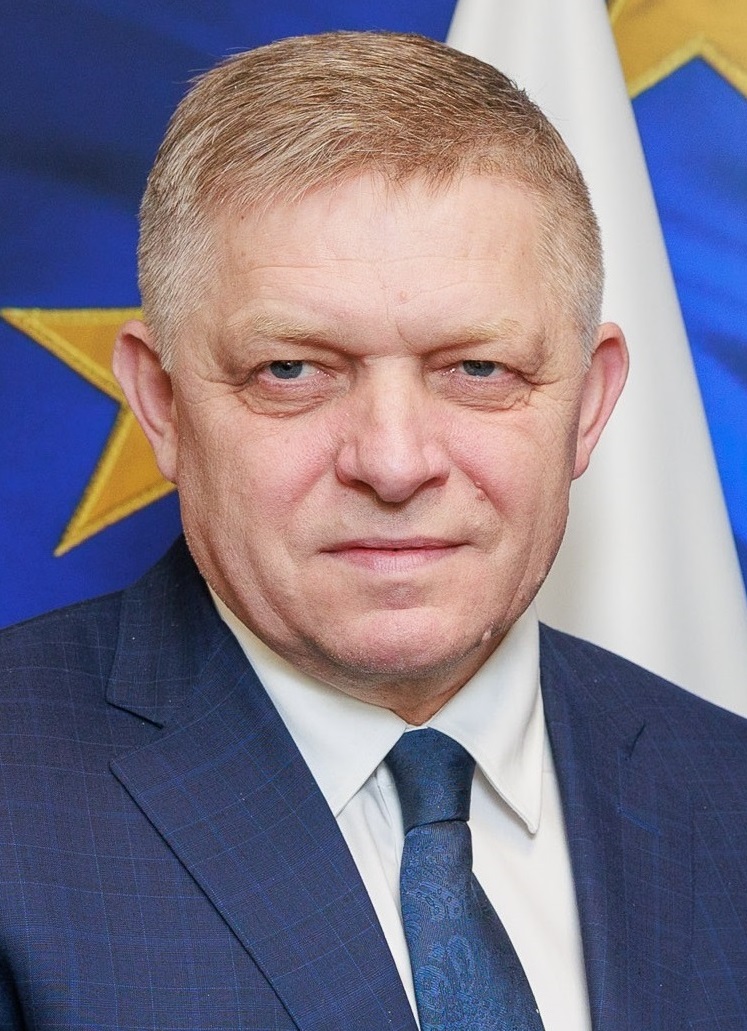
Robert Fico's return to power in the Slovak Republic has marked a profound discontinuity in the geopolitical trajectory of Central Europe. Through a system of systemic corruption, direct links with Russian intelligence, and the dismantling of the rule of law, Fico has transformed a NATO and EU member state into an ideological crowbar for Moscow's interests, paralyzing from within the Western capacity to respond to Russian aggression in Ukraine.
The Fico System: Corruption as the Foundation of Power
When Robert Fico returned to power in late 2023, he was no ordinary politician. He was a man who had already built his empire on foundations of systemic corruption, as revealed by the "Gorilla" scandal, the interception operation that redefined the relationship between politics and business in Slovakia. The transcripts of conversations in the apartment on Vazovova Street in Bratislava showed Fico discussing with Jaroslav Haščák, head of the Penta financial group, the illegal financing of the Smer-SD party in exchange for privatization contracts and public tenders.
The detail that became iconic - the request for a "Cola" during discussions about bribes - is now the symbol of his involvement in the oligarchic system. But beyond the anecdote, a darker truth emerges: the failure to prosecute this scandal for over a decade demonstrated the system's ability to protect its leaders. Only after the murder of journalist Ján Kuciak in 2018 did the truth fully emerge, revealing that former Prosecutor General Dobroslav Trnka had shown parts of the recordings to Fico as early as 2008.
The Sacrifice of Ján Kuciak: When the 'Ndrangheta Meets the Kremlin
The most violent breaking point of the Fico system was the assassination of investigative journalist Ján Kuciak and his fiancée Martina Kušnírová in February 2018. Kuciak was investigating links between the Slovak political elite and Calabrian organized crime, particularly the 'Ndrangheta, which had established itself in the east of the country to drain EU agricultural funds.
The most direct connection involved Mária Trošková, Fico's personal assistant and business partner of Antonino Vadalà - an 'Ndrangheta affiliate - in the company GIA Management. Vadalà himself, in conversations intercepted by Italian investigators, boasted of having positioned Trošková in the Prime Minister's office through the mediation of Viliam Jasaň, then secretary of the National Security Council. Despite Vadalà's criminal record and warnings from foreign intelligence services, Trošková maintained her role until the scandal erupted.
This episode revealed not only financial corruption but the permeability of Fico's cabinet to the interests of international criminal organizations, creating a dangerous precedent for national security and state sovereignty.
Paragraph 363: The Shield of Impunity
One of the most insidious tools used to guarantee impunity for Robert Fico and his allies is the so-called "Paragraph 363" of the Criminal Procedure Code. This provision grants the Prosecutor General absolute discretionary power to annul police and prosecutor decisions if procedural violations are deemed to have occurred.
Under Maroš Žilinka's leadership, Paragraph 363 has been invoked repeatedly to drop serious charges. In the "Súmrak" (Twilight) case, Fico and Robert Kaliňák, former Interior Minister, had been accused of establishing and leading a criminal group, abuse of power, and disclosing confidential tax information to target political opponents. Despite evidence gathered by NAKA and court opinions confirming the legitimacy of the investigations, Žilinka intervened to annul the charges.
The conviction of Dušan Kováčik, who for years led the Special Prosecutor's Office while accepting bribes from mafia groups to protect Smer-SD, represents definitive proof that the structures tasked with fighting corruption had been infiltrated. Fico's return to power brought as its first move the definitive abolition of the UŠP, an act interpreted as retaliation against magistrates who had dared to investigate his entourage.
The Direct Channel to Moscow: Russian Intelligence in Bratislava
Robert Fico's figure is central to the projection of Russian Federation interests in Slovakia. The Prime Minister has adopted rhetoric that perfectly mirrors Kremlin talking points: opposition to sending weapons to Ukraine, criticism of European sanctions, accusations that pro-Western institutions are agents of the United States. But this ideological affinity is not just electoral convenience.
In March 2025, a delegation composed of David Lindtner, Fico's legal advisor, and Ľuboš Blaha, Vice President of Parliament known for his pro-Putin positions, traveled to Moscow. The mission was not diplomatic in the traditional sense: the delegation met Sergey Naryshkin, head of Russia's Foreign Intelligence Service (SVR), and participated in forums organized by the Russian Foundation for Peace, led by Leonid Slutsky.
VSquare investigations revealed that this foundation regularly serves as cover for recruitment and information exchange with the GRU, Russian military intelligence. The fact that Lindtner, officially employed at the Slovak Government Office, went before the heads of Russian espionage while Slovakia is formally considered an "enemy country" by Moscow raises serious questions about the institutional loyalty of the Fico administration.
Under the leadership of Pavol Gašpar, son of Tibor Gašpar (former police chief accused of corruption), the civil intelligence service (SIS) has been accused of undergoing a "political drift," systematically ignoring Russian hybrid threats to focus on surveillance of civil activists and journalists. Veteran intelligence experts have denounced that the SIS has stopped considering Russia a priority danger.
Energy Blackmail: Gazprom as a Geopolitical Weapon
The Slovak economy remains deeply dependent on Russian energy supplies, a condition Robert Fico has used as political leverage. Slovakia continues to import about 60% of its natural gas from Russia through the Eustream pipeline, despite European Union efforts to diversify supplies.
Fico has repeatedly used Slovakia's veto power in European forums to delay sanctions packages against the Russian energy sector, claiming to act in the national interest but effectively operating as an obstacle to the common energy security strategy. In 2024, Fico accused Ukraine of wanting to provoke a "gas crisis" by blocking transit through its territory, going so far as to threaten suspension of emergency electricity supplies to Kyiv if transit was not restored.
This confrontational rhetoric with Ukraine has been praised by the Kremlin, which sees Fico as one of its main "understanding interlocutors" in Europe. The connections in this sector also involve figures from the economic oligarchy, such as Daniel Křetínský, owner of EPH and principal manager of Russian gas transit to Europe, who was accompanied by Fico to Moscow in the past to meet Gazprom leadership.
After the Attack: Radicalization as a Tool of Repression
The assassination attempt on Robert Fico in May 2024 in Handlová, where he was seriously wounded by gunfire from Juraj Cintula, was transformed by the government into a powerful tool of political repression. Although investigations described Cintula as a "lone wolf" motivated by personal hatred, Fico and his allies immediately accused the liberal opposition and independent media of being the moral instigators of the attack.
This narrative justified the adoption of the "Lex Assassination", a package of laws that drastically reduced civil liberties:
- Protest restrictions: Ban on demonstrating within 50 meters of state institutions and politicians' residences.
- Media control: Reform of public broadcaster RTVS (now STVR), placed under direct government control.
- NGO stigmatization: Law inspired by the Russian model to label civil society organizations receiving foreign funding as "organizations with foreign support."
The climate of extreme polarization allowed the government to present these measures not as an attack on democracy, but as a necessity for the "defense of national sovereignty" against obscure globalist forces.
The NATO Collaborationist: Undermining the Alliance from Within
Slovakia fully benefits from NATO security, EU cohesion funds, and the European single market. Simultaneously, Fico operates systematically to paralyze the Western response to Russian aggression. When he attacks NATO by accusing Jens Stoltenberg of "irresponsible alarms about a possible Russian attack" while Russia conducts a war of aggression in Europe, he is not defending Hungarian or Slovak national interests.
He is undermining the collective deterrence of the Alliance, a primary strategic objective of Moscow.
Slovakia has been classified as one of the countries most vulnerable to Russian influence in the Visegrád area, second only to Hungary. This vulnerability is fueled by a combination of factors:
- Diplomatic communication: Russian Embassy Facebook and Telegram channels presenting Russia as a cultural partner.
- Direct political contacts: Relations with Moscow that risk compromising NATO secrets.
- Parapolitical networks: "Brat za Brata" (pro-Russian) motorcycle groups ready for anti-Western mobilization.
- Institutional disinformation: SIS narratives about alleged pro-Western "coups."
The Fico Model: A Dangerous Precedent for Europe
The Slovak Republic under Robert Fico's government represents today a case study on how quickly an EU member state can slide toward authoritarian hybridization if control institutions are not adequately protected. The corrupt connections with internal oligarchy and international criminal groups have created an ecosystem where maintaining power is the only guarantee of personal freedom for political leaders.
In this context, the tactical alliance with Russia serves as a geopolitical shield: Moscow offers rhetorical support, energy resources, and hybrid warfare tools in exchange for an ally who paralyzes NATO and EU decision-making processes. The documented contacts with Russian intelligence, the appointment of controversial figures to SIS leadership, and the systematic destruction of the judicial system indicate that Slovakia is no longer a fully reliable partner for its Western allies.
The greatest risk lies in creating a precedent where corruption becomes the Trojan horse for Russian infiltration, transforming a democratic country into a gray zone of authoritarian influence.
Without a coordinated reaction from European institutions and an awakening of Slovak civil society, the "Fico model" risks becoming the norm for other aspiring illiberal leaders in the region.
This article is based on a documented geopolitical analysis of Slovak-Russian relations, which examined corruption scandals ("Gorilla," "Súmrak," "Očistec"), connections with international organized crime, contacts with Russian intelligence services (SVR, GRU, FSB), strategic energy dependencies, and patterns of rule of law dismantlement in the period 2005-2025.