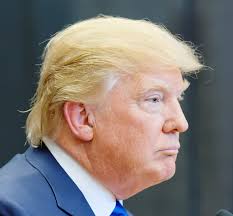
How Trump's America Became a Hostile Foreign Power and Pro-Trump European Politicians Transformed into Collaborators Serving Anti-European Interests
In December 2025, while the European Union defends its digital sovereignty and citizens' fundamental rights, the United States under Donald Trump has completed its metamorphosis: from historical ally to hostile foreign power systematically attacking European democratic institutions. European politicians who align with Trump are no longer simply sovereigntists or populists, but true collaborators serving the interests of a power that aims to vassalize the continent, undermining the European project from within through diplomatic sanctions, trade wars, and active support for continental far-right movements.
1. The Big Beautiful Pig: Anatomy of a Corrupt Presidency
The United States presidency in 2025 no longer represents a temporary political divergence from European liberal democracies, but embodies what geopolitical analysts define as the systemic 'rot' of the American system: a toxic blend of illiberalism, unprecedented conflicts of interest, and methodical disregard for the norms that have guaranteed transatlantic stability for eight decades.
The term 'The Big Beautiful Pig' is not journalistic invective, but a precise synthesis of the European perception of an administration that has transformed the White House into a commercial enterprise where public function is systematically subordinated to the personal profit of the President and his family circle. Viewed from European capitals - Brussels, Paris, Berlin - this trajectory represents an existential threat to the international liberal order and to the European social contract founded on the rule of law.
1.1 The Monetization of the Executive: Cryptocurrency as a Weapon of Corruption
The most blatant case of overlap between private interests and public function involves the digital asset sector. Donald Trump, once a fierce critic of cryptocurrencies which he called 'a scam', has completed a radical metamorphosis by becoming the promoter of World Liberty Financial (WLF), a cryptocurrency company directly managed by his family that allows the President to profit immediately from a market that his own administration is tasked with regulating.
The most controversial action was the suppression of the National Cryptocurrency Enforcement Team (NCET) within the Department of Justice. Deputy Attorney General Todd Blanche, Trump's former personal attorney, ordered the dissolution of the crypto crimes squad in April 2025. It emerged that Blanche, at the time of his nomination, held cryptocurrency investments valued between $159,000 and $485,000. Despite the formal commitment to divest, issuing orders that favor the sector before completing asset divestiture constitutes a blatant violation of federal conflict of interest laws.
Under Blanche's leadership, the DOJ drastically reduced investigations against digital currency exchanges and 'mixing' services, limiting actions only to cases of outright fraud or terrorism financing, systematically ignoring regulatory violations. Simultaneously, the Securities and Exchange Commission (SEC), led by Paul Atkins - holder of crypto stakes worth up to $6 million - suspended or abandoned numerous cases against sector companies previously targeted by authorities.
The structure of World Liberty Financial raises grave national security concerns. In 2025, the company received a deposit of $2 billion from MGX, an investment company controlled by the UAE royal family. Days after this massive investment, the Trump administration authorized the sale to the Emirates of hundreds of thousands of advanced AI chips produced by Nvidia, a transaction that had been blocked by the previous administration over fears of technology transfers to China. This quid pro quo demonstrates how the boundaries between American foreign policy and the Trump family's commercial interests have become non-existent.
1.2 The Favor Market: From Qatar to Timothy Mellon
The acceptance of luxury gifts from donors and foreign governments represents another pillar of what observers define as the 'new American feudalism'. The President's willingness to accept a $400 million Boeing 747 from the Qatari monarchy has sparked an unprecedented constitutional debate on the application of the emoluments clause. Although the White House maintains the jet is a gift for the Air Force, legal experts point out that the primary benefit falls to Donald Trump as an individual, who intends to use it during and after his term, eventually transferring it to his private presidential library.
The figure of Timothy Mellon, heir to the Mellon dynasty and the principal financier of the 2024 campaign with over $197 million, embodies the power of mega-donors to condition state functions. During the federal government shutdown in 2025, Mellon donated $130 million to pay military salaries, an act that, while presented as patriotic, was defined as 'illegal' by several senators since federal funds must be appropriated by Congress. This privatization of essential state functions transforms citizens into beneficiaries of billionaires' charity, destroying the impartiality of democratic institutions.
1.3 Jared Kushner and the Monetization of Diplomacy
Jared Kushner, the President's son-in-law, operates through his private equity fund Affinity Partners, which manages over $3 billion, of which 99% comes from foreign investors, mainly the Saudi Arabian Public Investment Fund (PIF). Despite the lack of sector experience and doubts expressed by the Saudi technical committee - which defined the operation as 'unsatisfactory in every aspect' - Crown Prince Mohammed bin Salman personally approved the $2 billion investment.
Senate investigations revealed that Affinity Partners collected approximately $157 million in management fees over three years, without generating any economic return for its clients. This scheme has been described as a form of deferred compensation for the work performed by Kushner during the first Trump term, creating a 'pay-to-play' system that guarantees access to the White House in exchange for capital.
An emblematic case is the acquisition of Electronic Arts (EA) by the Saudi fund, facilitated by Kushner. Although Affinity Partners holds only 5% of the company, Kushner acted as the central intermediary, ensuring that the operation did not undergo the strict scrutiny of the Committee on Foreign Investment in the United States (CFIUS), despite the evident risks to the privacy of millions of American users' data.
1.4 The Epstein Shadows: Moral Decadence and Vulnerability to Blackmail
The release of thousands of pages from the so-called 'Epstein Files' in December 2025 has shed new light on Donald Trump's past and his ties to the financier convicted of sex trafficking. Flight records show that Trump traveled on Epstein's private jet ('Lolita Express') at least eight times between 1993 and 1996, much more frequently than previously admitted.
In one specific case in 1993, Trump and Epstein were the only passengers on board; in another, the passengers were Epstein, Trump, and an unidentified twenty-year-old woman. The files also include references to an alleged 1995 phone call, intercepted by a limousine driver, in which Trump allegedly discussed 'abuse of a girl' with Jeffrey Epstein. Obtained recordings show Epstein boasting of his closeness to Trump, claiming that 'the first time he slept with Melania was on my plane'.
Trump's propensity to frequent environments linked to human trafficking and predatory power is seen by Europe as the final symptom of a democracy that has lost its ethical compass and as a source of vulnerability to blackmail that makes the President of the United States susceptible to pressure from foreign actors in possession of compromising material.
1.5 The Russian Asset: Thirty Years of Financial Dependence on the Kremlin
The most disturbing aspect for European security is the suspicion, fueled by decades of financial evidence, that Donald Trump may be a Russian 'asset'. Investigations show that the KGB began 'watching' Trump as early as 1987, organizing his first trip to Moscow through Russian intelligence protocols. According to Yuri Shvets, former KGB major, Trump was cultivated for decades as a 'special unofficial contact', fed with Russian talking points that he then regularly published.
After the financial failures of the 1990s, when American banks considered him too risky, Trump found his lifeblood in Russian capital. Between 1998 and 2012, numerous Trump-branded projects were financed by Russian oligarchs and figures close to the Kremlin:
- Bayrock Group: Founded by a former Soviet officer and headquartered in Trump Tower, it provided the key financing for Trump SoHo
- Deutsche Bank: The only major institution to lend money to Trump, involved in a $10 billion Russian money laundering scandal
- The Rybolovlev purchase: The sale of the Palm Beach mansion to fertilizer magnate Dmitry Rybolovlev for $95 million - more than double its value - interpreted as a massive transfer of Russian funds disguised as a real estate transaction
- Miss Universe 2013: Trump received a $20 million commission from Kremlin-linked partners for the Moscow-hosted pageant
Intelligence experts suggest that Moscow uses these financial ties as kompromat (compromising material) to influence the President's decisions, who has shown 'unprecedented obedience' toward Vladimir Putin, systematically questioning European sovereignty and Ukraine's integrity.
2. The Attack on European Digital Sovereignty: Open War Against the DSA
In December 2025, the Trump administration intensified its campaign against European sovereignty to an unprecedented level: diplomatic sanctions against European officials guilty of defending citizens' fundamental rights in the digital world. This escalation represents the definitive breaking point: the United States is no longer a partner, but a hostile foreign power using coercion tools to protect the economic interests of American tech giants against regulations democratically adopted by the European Union.
2.1 Sanctions Against Defenders of Digital Democracy
On December 24, 2025, Secretary of State Marco Rubio announced visa ban sanctions against five European figures accused of having 'led organized efforts to coerce American platforms to censor, demonetize, and suppress American viewpoints that they oppose'. The five targeted individuals represent European excellence in defending digital rights:
- Thierry Breton: Former European Commissioner for the Internal Market (2019-2024), architect of the Digital Services Act. Defined by US Undersecretary of State Sarah Rogers as 'the brain' behind the DSA.
- Imran Ahmed: CEO of the Center for Countering Digital Hate, an organization that has systematically documented hate speech on X (formerly Twitter) since Elon Musk's acquisition.
- Clare Melford: CEO of the Global Disinformation Index, a British organization working to make the internet safer by collaborating with governments, industry, and civil society.
- Josephine Ballon and Anna-Lena von Hodenberg: Co-leaders of HateAid, a German organization supporting victims of online hate. Ballon is a member of the German Advisory Council for Digital Services.
Marco Rubio declared: 'President Trump has been clear that his America First foreign policy rejects violations of American sovereignty. The extraterritorial overreach of foreign censors targeting American speech is no exception'. He added that the State Department 'is ready and willing to expand' the sanctions list if others don't 'stand down'.
2.2 The Digital Services Act: Citizen Protection or 'Censorship'?
The Digital Services Act (DSA), which came fully into force in summer 2023, establishes a comprehensive legal framework for digital accountability in the European Union. The legislation was adopted through a democratic and sovereign process involving the European Parliament and all 27 member states. As Thierry Breton pointed out, 90% of the European Parliament and all 27 EU members voted unanimously for these digital regulations.
The DSA's objectives are clear and unambiguous:
- Protect users from disinformation, hate speech, and illegal content
- Ensure that 'what is illegal offline is also illegal online'
- Require platforms to quickly remove illegal content such as hate speech and child abuse material
- Require 'very large' platforms (Apple, Amazon, Facebook, Google, Instagram, Microsoft, Snapchat, X) to assess risks related to their services and implement mitigation systems
- Guarantee transparency and give users the right to challenge content moderation decisions
The European Commission responded to American sanctions firmly: 'Freedom of expression is a fundamental right in Europe and a core value shared with the United States across the democratic world. The EU is an open, rules-based single market with the sovereign right to regulate economic activity in line with our democratic values and international commitments. Our digital rules ensure a safe, fair and level playing field for all companies, applied fairly and without discrimination'.
2.3 The European Response: From Macron to von der Leyen
French President Emmanuel Macron firmly condemned the American measures: 'France condemns the visa restriction measures adopted by the United States against Thierry Breton and four other European figures. These measures amount to intimidation and coercion aimed at undermining European digital sovereignty'. Macron emphasized that 'the rules governing the European Union's digital space must not be determined outside Europe'.
European Commission President Ursula von der Leyen stated on X: 'Free speech is the foundation of our strong and vibrant European democracy. We are proud of it. We will protect it'. The Commission warned: 'If necessary, we will respond swiftly and decisively to defend our regulatory autonomy against unjustified measures'.
Thierry Breton responded to the sanctions with a post on X asking whether 'a wave of McCarthyism is blowing again in the United States'. He reminded Americans that 'censorship is not where you think it is', referring to Meta's recent modifications to its hate speech policies, which now allow speech describing trans people as 'mentally ill' and women as 'household objects' - an act of 'genuflection to the Trump agenda', according to European observers.
2.4 The X Fine and Musk's Fury
The European Commission announced in early December 2025 a fine of 120 million euros against X (formerly Twitter), the first sanction issued under the DSA. The fine was issued the same day the Trump administration released its National Security Strategy, which accused the EU of censoring freedom of speech.
Elon Musk's platform X has been under fire for months for doing little to counter illegal and harmful content, instead offering a platform to the German far-right party AfD in the weeks leading up to the German federal elections. The fine triggered a furious response from Musk, who called for the abolition of the European Union.
Mark Zuckerberg, CEO of Meta, and Tim Cook, CEO of Apple (both financial supporters of the Trump campaign), complained to the President about potential European fines. It's no coincidence that Zuckerberg framed EU fines for DSA non-compliance alongside trade tariffs. Trump has already shown he won't hesitate to enter a trade war to assert American interests, even at the expense of allied democracies.
3. European Collaborators: Vassals of a Hostile Foreign Power
In this context of open war between the Trump administration and European democratic institutions, European politicians who align with Trump can no longer be considered simply sovereigntists or populists. They are collaborators in the classic sense of the term: figures operating from within European democratic institutions to serve the interests of a hostile foreign power that aims to undermine the unity, sovereignty, and capacity for action of the European Union.
3.1 Giorgia Meloni: The 'Trump Whisperer' and the Betrayal of Europe
Giorgia Meloni, Italian Prime Minister and leader of the post-fascist Brothers of Italy party, has positioned herself as Trump's main European intermediary. She was the only European leader invited to Trump's inauguration in January 2025 and has developed what is described as a 'privileged relationship' with the American President.
During the White House meeting in April 2025, Meloni used exactly two sentences in the Oval Office to signal to her host that she was a kindred spirit: 'We both share another fight, which is the fight against woke ideology and DEI that would like to erase our history', she proclaimed in English, using some of President Trump's favorite code words. It was a barely subtle attempt to make clear from the start that she was not the kind of European leader Trump had hosted in the same room in previous months.
Meloni added: 'My goal is to make the West great again, and I think we can do it together'. This phrase - a clear plagiarism of the MAGA slogan - reveals the level of ideological subordination to the Trump project. As Nayib Bukele, President of El Salvador and another Trump ally, observed, Meloni knew exactly what to say to convey her MAGA credentials.
Yet, despite this personal closeness, Meloni has achieved no concrete results for Italy or Europe. Italy has a $43.9 billion trade surplus with the United States, making the country a prime target for Trump's tariffs. Italian defense spending, at 1.49% of GDP, is among the lowest in Europe, well below the NATO target of 2%. Meloni could not secure any real exemptions for either Italy or the EU.
As one Italian analyst observed: 'I think Meloni is making a mistake thinking she can overlook this, when, in reality, she should primarily act as a guarantor of the European system and to protect that system'. Meloni's choice to position herself as Trump's intermediary rather than as a defender of European interests qualifies her as a collaborator: a leader who subordinates the interests of Europe and Italy to the objectives of a hostile foreign power.
3.2 Viktor Orban: The Kremlin's Permanent Bridge
Viktor Orban, Hungarian Prime Minister, represents the most established model of European collaboration. As documented in previous investigations, Orban maintains systematic relations with the Kremlin through:
- Structural energy dependence: The Paks II nuclear project managed by Rosatom will guarantee Russia control over Hungarian energy security until 2050
- GRU channel: Documented connections between Russian military intelligence and the Hungarian media-political apparatus through figures like Georg Spottle
- Systematic veto: Blocking 6.5 billion euros for Ukraine through the European Peace Facility
- Defense of Russian assets: Opposition to using frozen Russian assets to finance Ukraine
Orban now also represents a privileged contact point with the Trump administration. Polls from the European Council on Foreign Relations show that 68% of members of Orban's Fidesz party consider the Trump presidency 'a good thing' for their country - the highest approval rate in Europe. Orban thus embodies double collaboration: simultaneously serving Moscow and Washington against European interests.
3.3 Alternative fur Deutschland (AfD): The German Trojan Horse
The Alternative for Germany, classified as an extremist party by German security services, has received public support from the Trump administration. Vice President JD Vance used his trip to the Munich Security Conference in February 2025 to meet with AfD leader Alice Weidel and endorse the party in the German federal elections.
Elon Musk live-streamed a conversation with Weidel in the weeks leading up to the elections, urging Germans to vote for the far-right party. The AfD nearly doubled its vote share in the elections, rising to second place with 20.8%, behind only the center-right Christian Democratic Union.
As documented in previous investigations, the AfD was at the center of the 'Moscagate' scandal, with its top candidates for the European elections - Maximilian Krah and Petr Bystron - under investigation for receiving Russian funding through the Voice of Europe platform. The AfD thus finds itself in a paradoxical position: simultaneously supported by Moscow (through illicit funding) and Washington (through public endorsements), operating as an agent of two hostile foreign powers within German democracy.
The AfD has declared it will restart the Nord Stream pipelines to import gas from Russia, positioning itself against American interests (which require increased purchases of US liquefied natural gas) but in perfect alignment with the Kremlin. This demonstrates how contemporary collaboration is opportunistic: the AfD serves Russian interests on energy and American interests on destabilizing European institutions.
3.4 Marine Le Pen and the Rassemblement National: The Russian Debt
Marine Le Pen and the Rassemblement National represent the classic case of financial dependence on Moscow transformed into political alignment. The party received a loan of 9.4 million euros from a Russian bank in 2013, creating a dependency relationship that Le Pen herself has publicly defended, going so far as to imagine a defensive alliance between France and Russia once the war in Ukraine is concluded.
In December 2025, Le Pen and Jordan Bardella met with Charles Kushner, the American ambassador to France (and Jared Kushner's father), to discuss the party's program and prospects. Kushner posted on X: 'I appreciated the opportunity to learn from Marine Le Pen and Jordan Bardella about the RN's economic and social agenda and their views on what lies ahead for France'.
As European parliamentarian Valerie Hayer, President of the liberal Renew Europe group, pointed out: 'Trump wants to divide Europe to dominate it better'. Le Pen perfectly embodies this strategy: financially dependent on Moscow, politically courted by Washington, operationally engaged in dismantling the European Union from within.
Trump publicly supported Le Pen after her conviction for embezzlement of EU funds and ban from running for elections for five years, writing on Truth Social: 'FREE MARINE LE PEN', calling the court ruling a 'witch hunt'. This explicit support for a convicted leader demonstrates Trump's contempt for the European rule of law.
3.5 Other Collaborators: From Wilders to Farage
The list of European collaborators is extensive and includes:
- Geert Wilders (Netherlands): The 'Dutch Trump', leader of the Party for Freedom (PVV) which won 23.5% in the 2023 legislative elections. Shares anti-immigration and anti-establishment positions with Trump
- Nigel Farage (United Kingdom): Leader of Reform UK, architect of Brexit, and longtime Trump supporter. Polls indicate Reform UK as the fastest-growing party in the United Kingdom
- Herbert Kickl (Austria): Leader of the Freedom Party of Austria (FPO), which won the 2024 parliamentary elections. One of the few European politicians invited to Trump's inauguration (though he didn't attend). Considers Trump a model
- Santiago Abascal (Spain): Leader of Vox, a party that shares MAGA ideology and has participated in joint events with Le Pen, Orban, and Wilders
According to a document released after the new American National Security Strategy, probably originating from the MAGA movement, four countries are listed as targets where the United States should increase its influence by supporting 'patriotic' forces to encourage their exit from the EU: Austria, Hungary, Italy, and Poland.
4. The Dismantling Strategy: How Trump Wants to Destroy the EU
The overall analysis of the Trump administration's actions reveals a coordinated strategy to dismantle the European Union from outside and within. This strategy operates on three complementary axes:
4.1 First Axis: Trade War and Economic Coercion
Trump has imposed 20% tariffs on all European exports (subsequently suspended for 90 days), using economic pressure as a weapon to force concessions. The strategy involves:
- Threatening tariffs until the EU 'loosens' the implementation of the Digital Services Act
- Offering tariff relief only for key sectors (steel, aluminum) in exchange for compromises on digital regulation
- Attempting to negotiate bilateral agreements with individual member states (like Meloni's Italy) to divide the European front
Washington has indicated it would provide tariff relief only if the EU agreed to loosen implementation of digital rules. For the EU, this idea represents a red line, as it would undermine its right to set policies independently of the US government.
4.2 Second Axis: Active Support for the European Far Right
The Trump administration has abandoned all pretense of neutrality in European internal affairs, openly intervening in national elections to support far-right parties:
- Germany: JD Vance met with the AfD leader and endorsed the party; Elon Musk streamed conversations with Weidel and urged Germans to vote AfD
- Romania: The administration supported Calin Georgescu, a pro-Russian and fascist candidate in the 2025 presidential elections (invalidated by the Constitutional Court due to Russian interference)
- Poland: Homeland Security Secretary Kristi Noem traveled to Poland to endorse Karol Nawrocki days before the presidential runoff
- France: Trump publicly supported Marine Le Pen after her conviction, calling the ruling a 'witch hunt'
As Thomas Carothers, director of the democracy, conflict, and governance program at the Carnegie Endowment for International Peace, observed: 'I can't think of a time when a US president was willing to openly declare his preferences in foreign elections in this way, at least in modern history'.
4.3 Third Axis: Ideological Delegitimization of the EU
The 2025 American National Security Strategy describes the European Union as a 'globalist' entity dedicated to exploiting American protection and suggests that the continent faces 'civilizational erasure' due to migration policies and supranational integration. This narrative, imbued with conspiracy theories like the 'great replacement', aims to:
- Present the EU not as an ally but as an ideological adversary
- Argue that Europe is 'woke', 'globalist', and dedicated to 'censoring' American freedom of speech
- Legitimize support for populist and sovereigntist movements seeking to dismantle community institutions
Vice President JD Vance, during his speech at the Munich Security Conference, argued that the 'threat from within' represented by the EU's internal rules is the most significant risk to Europe. He called European Commissioners 'commissars' (with obvious Soviet overtones) and argued that foreign interference is often used to censor content.
5. Conclusions: The Duty of European Resistance
The evidence accumulated in this report leads to an inescapable conclusion: the United States under Donald Trump is no longer a strategic partner for the European Union, but a hostile foreign power actively pursuing the destabilization of European democratic institutions, the economic vassalization of the continent, and the dismantling of the European integration project.
'The Big Beautiful Pig' - a term that perfectly synthesizes the combination of corruption, moral decadence, and transactional authoritarianism - is not just a man, but a power system that has rejected the values of the Enlightenment and international cooperation in favor of authoritarian, xenophobic populism founded on:
- Systemic conflicts of interest: From cryptocurrency monetization to the sale of diplomatic access through Jared Kushner
- Financial dependence on foreign capital: From Russian loans of the 1990s to UAE investments in 2025
- Systemic vulnerability to blackmail: From the Epstein shadow to Kremlin ties documented by the KGB since 1987
- Contempt for the rule of law: From sanctions against democratically elected European officials to economic pressure to force the abandonment of sovereign regulations
In this context, European politicians who align with Trump - from Giorgia Meloni to Viktor Orban, from the German AfD to Marine Le Pen - can no longer be considered legitimate representatives of national or European interests. They are collaborators in the historical sense of the term: internal agents serving the objectives of a hostile foreign power, undermining from within Europe's sovereignty, unity, and capacity for action.
5.1 The Contemporary Collaboration Model
European collaboration in 2025 presents specific characteristics:
- Double loyalty: Simultaneously serving the interests of Washington (war against European regulations) and Moscow (opposition to support for Ukraine, energy dependence on Russia)
- Operating from within: Using European democratic institutions (European Parliament, national governments, veto rights) as weapons against Europe itself
- Mutual legitimization: Washington supports European far-right parties; these parties amplify Trump narratives against the EU
- Shared ideology: Rejection of multilateralism, xenophobic nationalism, attacks on minority rights, hostility toward science and democratic institutions
5.2 The Necessary Response: Militant Democracy
Europe must respond with a strategy of 'militant democracy', recognizing that tolerance toward those who actively undermine democratic institutions is not virtue but suicide. Necessary actions include:
- Intransigent defense of digital sovereignty: Rigorous application of the DSA without yielding to American pressure
- Strategic independence: Acceleration of European autonomy in defense, technology, and energy
- Countering foreign interference: Sanctions against entities and individuals actively supporting the destabilization of European democracies
- Financial transparency: Mandatory complete disclosure of foreign funding for political parties and think tanks
- Support for civil society: Active protection of organizations defending digital rights and countering disinformation
- Reciprocal response: If Washington imposes sanctions on European defenders of digital democracy, Europe must consider proportionate measures against Trump administration figures
As French political commentator Renaud Pilat suggested: 'Thierry Breton can no longer enter American territory. We must ban Elon Musk from coming to Europe'. This reciprocity is not revenge, but a defense of European dignity and sovereignty.
5.3 What's at Stake
Polls conducted in France, Germany, Italy, Portugal, and Spain show that the absolute majority of European citizens consider the US political system under Trump no longer functional or even dangerous to world peace. The contrast between the two models is stark:
- Governance: European multilateralism vs. American transactional nationalism
- Civil rights: European protection of social and minority rights vs. American rhetoric of 'civilizational erasure'
- Economy: European social democracy and regulation vs. extreme American deregulation and protectionism
- Environment: European Green Deal vs. American promotion of fossil fuels
If the United States chooses to be governed by an entity that prioritizes personal gain over global stability, the European Union remains the last guardian of human dignity and democratic progress. The fight against 'The Big Beautiful Pig' and its European vassals is not an ideological choice, but a survival imperative for the model of civilization that Europe represents.
The alternative is clear: either Europe firmly defends its sovereignty, its values, and its democratic institutions, rejecting internal collaboration and external interference, or it will become a vassal province of a transatlantic empire founded on corruption, illiberalism, and contempt for the fundamental rights that have defined Western civilization since the postwar era.
The choice is Europe's. The time to choose is now.
Bibliography and Sources
This report is based on documented and verifiable sources:
Attack on European Digital Sovereignty
- France 24 - The EU laws reining in big tech and fighting disinformation
- CNBC - Ex-EU commissioner Breton denounces U.S. visa ban
- NPR - Trump administration bars 5 Europeans from entry over alleged censorship
- Euronews - Europe defends its digital rules after Trump targets Breton
- CNN - State Department imposes sanctions on former EU official for 'censorship'
Giorgia Meloni and Trump
- CNBC - Italy's 'Trump whisperer' Giorgia Meloni to meet U.S. president
- CNN - Trump finds kindred European spirit in Meloni
- CBS News - Italy's Giorgia Meloni meets with Trump at the White House
- Carnegie Endowment - Can Meloni Save the Transatlantic Alliance?
European Far Right and Trump
- Carnegie Endowment - The European Radical Right in the Age of Trump 2.0
- European Interest - AfD, Marine Le Pen and 'patriots' align with Trump and Putin
- ECFR - When culture war and trade war clash: Trump's troubled alliance with Europe's far right
- CNN - Marine Le Pen: Trump publicly backs France's far-right figurehead
- Foreign Affairs - The Paradox of Europe's Trumpian Right
Document produced on December 26, 2025