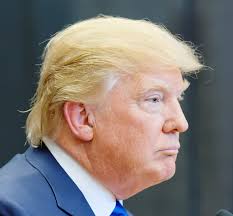
The extraordinary simplicity of Donald Trump's language, which quantitative analyses place at the level of a ten-year-old child, is not a cultural defect but a strategic weapon. Through syntactic fragmentation, rejection of expertise, and systematic use of verbal violence, Trump has built a communicative model that demolishes the foundations of rational democratic discourse, making himself the ideal collaborator of the global authoritarian axis.
The Perfect Collaborationist: When Linguistic Poverty Becomes Geopolitical Strategy
In the landscape of contemporary collaborationism analyzed in previous investigations, where European political figures undermine Western cohesion from within through alignments with Moscow, a protagonist emerges who represents the perfect synthesis of this phenomenon: Donald Trump. If Viktor Orbán builds diplomatic bridges with the Kremlin and corrupt members of the European Parliament amplify Russian propaganda, Trump operates at an even deeper and more dangerous level. His communication technique does not merely convey pro-authoritarian messages: it itself constitutes a structural attack on the foundations of rational democratic discourse.
Linguistic and cognitive analysis reveals a paradoxical truth: what to a superficial observer appears as "elementary school essays" is actually a sophisticated communicative architecture, calibrated to demolish trust in expertise, science, and institutions. This strategy perfectly serves the interests of the Putin-Trump axis, creating an information ecosystem in which factual truth becomes negotiable and emotional manipulation replaces critical reasoning.
As observed in the framework of the "contemporary collaborationist," these actors are characterized by three distinctive traits: the abnegation of scientific reason, the adoration of the despotic axis, and the misconception of the host civilization. Trump exemplifies this triple toxicity, but adds a crucial element: he has transformed communication itself into a weapon of hybrid warfare, capable of infecting and radicalizing millions of people through language that bypasses every critical filter.
The Architecture of Elementary Discourse: Quantitative Data
Computational analyses conducted on Trump's speech corpora converge on surprising and alarming statistical data. Using readability formulas such as the Flesch-Kincaid Grade Level, academic studies position Trumpian language between the fourth and fifth year of elementary school, corresponding to an age between 9 and 11 years. This positioning makes him an extreme "outlier" in the American political landscape, where the average for presidential candidates is at the high school level (ninth-tenth grade).
The following table synthesizes comparative data with other political leaders and U.S. presidents, highlighting the unprecedented break represented by Trump compared to historical norms of presidential rhetoric:
Political Leader F-K Level (Grade) Average Sentence Length Lexical Complexity Donald Trump 4.1 - 5.0 10.4 - 14.5 words Very Low George W. Bush 5.0 18.0 words Low Barack Obama 9.0+ 22.0+ words High Ted Cruz 8.9 20.0+ words Medium Bernie Sanders 10.1 21.0+ words Medium-High Abraham Lincoln 11.0 N/A Excellent These data are not mere statistical curiosities but reveal a communication strategy that deliberately aims to bypass every form of critical processing. The extreme brevity of sentences (10-14 words versus the presidential average of 17-24) drastically reduces the cognitive load required for message processing. This makes Trumpian communication extremely effective in mass contexts and on social media, where attention is a scarce resource and competition for visibility requires immediacy and emotional impact.
Simplicity as a Weapon: Populism and Rejection of Expertise
The Language of "Oral Culture" as an Antidote to the Establishment
The critical interpretation of Trumpian language as "poor cultural preparation" risks overlooking the political function of the adopted linguistic register. There is a fundamental distinction, studied by linguistic anthropologists, between the language of "written culture" (formal, dense with nouns, logically sequential) and the language of "oral culture" (informal, dense with verbs, emotionally charged). Trump has knowingly adopted the latter to position himself as the antithesis of the conventional politician.
Using a "verb-heavy" style, typical of casual conversation, Trump eliminates institutional distance and presents himself as a "common man" who speaks the language of the street. This strategy is not accidental but responds to a precise objective: building a political identity that explicitly rejects the codes of the intellectual elite, transforming his estrangement from academic culture into a badge of authenticity and closeness to the "real people."
Permanent Hyperbole and Semantic Polarization
Trumpian discourse is characterized by the massive use of hyperboles and intensifiers ("really," "extremely," "enormously," "tremendous") that create a binary semantic universe where everything is either "terrible" or "incredible," enemies are "total disasters" and victories "beautiful." This semantic polarization, described by rhetoric theorist Kenneth Burke as "burlesque," transforms political debate into a theatrical clash between malevolent forces and saviors of the homeland.
This technique makes analytical depth superfluous: it is not necessary to explain why an opponent is dangerous if one can simply define them as "the worst," "a disaster," "a threat to America." The audience does not need to think, only to feel. Emotion replaces reason, and the complexity of reality is compressed into slogans that function as instantaneous emotional triggers.
The Rejection of Scientific Truth and Institutions
The Abnegation of Reason: Anti-Vax and Climate Change Denial
As observed in the framework of the contemporary collaborationist, one of the distinctive traits of this figure is the abnegation of scientific reason. Trump perfectly embodies this pattern through his systematic approach to denying expertise and factual truth. His opposition to vaccines and his skepticism toward climate change are not simple political positions but direct attacks on trust in health institutions, scientific research, and the empirical method itself.
During the COVID-19 pandemic, Trump repeatedly promoted his own "hunches" over medical data, suggesting unproven treatments and systematically undermining the credibility of health experts. This rejection of technical expertise is not a simple error in judgment but a strategic choice that serves to delegitimize any source of authority not aligned with his political narrative.
Trump's climate denialism has direct geopolitical consequences: by sabotaging the West's concerted efforts for ecological transition, he indirectly provides oxygen to fossil fuel-based economies, often managed by regimes that the authoritarian axis intends to favor. Russia, as the main exporter of natural gas, directly benefits from every delay in the Western energy transition. In this sense, Trump's scientific denial perfectly serves Putin's strategic interests.
Manipulation of "Common Ground" and Argumentative Fallacies
A central aspect of Trump's communication strategy is the ability to manipulate the so-called "common ground," that is, information taken for granted in discourse. Instead of defending himself against accusations, Trump uses "spin" strategies that transform negativity into strengths of his brand. If accused of sexism, he declares he rejects the "political correctness" imposed by elites; if accused of racism, he claims to be "pro-security" and to defend American borders.
Analysis of argumentative fallacies in his tweets and speeches shows massive use of ad hominem attacks and unproven presuppositions. Systematically referring to the media as "fake news" or to Democrats as "radicals" requires no proof: obsessive repetition transforms the accusation into perceived truth. This type of communication does not seek to convince the opponent through reason but aims to consolidate the identity of the in-group against a constantly demonized external enemy.
Cultural Gaps: Strategic Ignorance or Real Deficit?
Historical Gaffes as Indicators of Preparation
While linguistic form can be interpreted as a strategic choice, the content of Trump's speeches provides more direct clues about genuinely deficient cultural preparation, particularly in the fields of history, international politics, and constitutional law. Trump's statements about the American Civil War are emblematic: claiming that Andrew Jackson (who died in 1845) could have prevented the conflict that broke out in 1861 reveals an inability to understand the structural and chronological dynamics of history.
Referring to Frederick Douglass, the 19th-century abolitionist, as if he were still alive and doing an "amazing job" in 2017 suggests that Trump's cultural references are fragmentary and often learned in real-time during briefings rather than rooted in solid formation. Similarly, presenting as a personal "discovery" the fact that Abraham Lincoln was a Republican reveals superficial knowledge of the historical foundations of his own party.
The following table summarizes some of Trump's most significant historical and cultural gaffes, with their implications:
Historical Error/Gaffe Description Cultural Implication Andrew Jackson and the Civil War Claim that Jackson could have avoided the conflict Chronological ignorance (Jackson died 16 years earlier) Frederick Douglass "Doing an amazing job" (2017) Lack of knowledge of the figure's biography Lincoln and the Republican Party Presentation of the "discovery" as revelation Superficial knowledge of his own party's historical foundations Political Geography Doubt about the border between India and China Elementary gaps in world geopolitics Vaccines and Science "Hunches" on medical data during the pandemic Rejection of technical expertise and the scientific method These episodes are not simple linguistic slips but indicators of what some scholars define as "essential ignorance" of politics and the Constitution. Trump seems incapable of thinking by historical analogy, precedent, or comparison, fundamental elements for governance wisdom that does not operate in a vacuum. This lack of "historical consciousness" makes his leadership unpredictable and, according to many observers, dangerous, as it is devoid of consolidated ethical and institutional references.
The Brand of Ignorance: "I Love the Poorly Educated"
What distinguishes Trump from other political leaders with cultural gaps is his ability to transform these gaps into a political asset. His famous statement "I love the poorly educated" after a victory in the Nevada primaries was not a slip but a programmatic declaration. Trump has deliberately built a brand that celebrates estrangement from elite culture, making his own ignorance a symbol of authenticity and closeness to the "real people."
This strategy creates a value inversion: what would traditionally be considered a deficit (lack of historical, cultural, scientific preparation) becomes a merit, a sign of non-belonging to that intellectual class perceived as responsible for American decline. In this way, Trump not only justifies his gaps but weaponizes them against the establishment, transforming every criticism of his ignorance into confirmation of his estrangement from the corrupt system.
The Intelligence Paradox: Selective Cognitive Abilities
The debate on Trump's cultural preparation must necessarily interface with the concept of intelligence. Psychologist Howard Gardner, theorist of multiple intelligences, recognizes Trump's high "interpersonal intelligence" and extraordinary "media intelligence." Trump possesses the linguistic intelligence necessary to speak coherently for hours without a script and the logical-mathematical intelligence to compete in the real estate sector, but his true strength lies in the ability to "mesmerize" crowds.
This form of intelligence does not require vast academic culture; on the contrary, it feeds on an instinctive understanding of the population's needs, fears, and resentments. Trump defines himself as a "masterful storyteller," capable of embodying the story he tells and simplifying it into powerful slogans that function as emotional triggers. "Make America Great Again" is not just a slogan but a semantic container in which each voter can project their nostalgia for an idealized America.
However, Gardner notes an almost total absence of "intrapersonal intelligence," that is, understanding of self and one's limits, and a lack of propensity for attentive and reflective reading. This creates the paradox of a leader who is "traditionally intelligent" in terms of IQ but culturally and introspectively poor. The deliberate choice to align with the "less educated" is therefore not a purely cynical strategy but also reflects a genuine affinity: Trump does not pretend to be anti-intellectual, he truly is.
The Evolution Toward Verbal Violence: From Positive to Negative Populism
An alarming finding from recent studies concerns the sharpening of Trump's tones over the years. His rhetoric has shifted from "positive populism" (focused on uniting the people against elites in 2016) to "negative populism" (focused on denigrating specific out-groups). The use of violent and dehumanizing vocabulary has increased exponentially, with expressions like "poisoning the blood of our country," "vermin," "enemy within" echoing the communication of authoritarian regimes of the past.
This linguistic evolution suggests that simplicity is no longer just a tool for accessibility but a vehicle for "behavioral disinhibition" and radicalization. Trumpian language no longer aims only to simplify the political message but to stimulate hostility and aggressive thoughts in his supporters. Verbal violence becomes a form of psychological preparation for physical violence, as demonstrated by the assault on the Capitol on January 6, 2021.
In this context, the apparent "cultural poverty" merges with a precise will to break the taboos of democratic public discourse. Trump uses verbal violence to normalize aggression, to make acceptable what would have been unthinkable in a presidential speech just a few years earlier. This process of degrading political language perfectly serves authoritarian objectives: if words lose their shared meaning and verbal violence becomes the norm, then truth itself becomes negotiable and the boundary between democracy and authoritarianism thins.
Digital Language: Twitter, Truth Social, and the Codification of Hate
The social media environment has been the ideal terrain for the proliferation of Trumpian rhetoric, allowing him to transform shallow syntactic depth into a competitive advantage. Analysis of his tweet corpus (over one million words analyzed) highlights the ubiquity of a caricatural political jargon, compulsive use of capital letters for emphasis, and obsessive repetition of slogans.
Computational analysis through tools like Text Inspector reveals that Trump scores low in terms of "lexical diversity" due to his tendency to obsessively repeat terms like "Fake News," "Crooked," "Sleepy Joe," or "Witch Hunt." This compulsive repetition is not a communicative defect but a well-studied propaganda technique: repetition transforms accusations into perceived truths, regardless of their factual foundation.
The transition from Twitter to Truth Social has further exacerbated these traits. If on Twitter Trump still had to interface with a varied information ecosystem, on Truth Social his communication has become even more self-referential and aggressive. This "alt-tech" environment allows him to maintain significant communicative power through his supporters who act as amplifiers, creating an echo chamber in which radicalization proceeds without brakes or contradiction.
Conclusion: Putin's Perfect Ally in the War on Western Democracies
From the integrated analysis of linguistic, historical, and psychological data emerges a complex and alarming picture. Trump's language effectively reveals poor cultural preparation in the academic and traditional sense of the term. Gaps in historical knowledge, inability to manage analytical complexity, and rejection of the scientific method are facts proven by numerous quantitative indicators. The impression of speaking in "elementary school essays" finds confirmation in readability metrics that systematically position him at the level of a 10-year-old child.
However, concluding that it is only ignorance would be an error in strategic assessment. Trump's cultural "poverty" has become his greatest political resource. He has transformed his estrangement from elite culture into a weapon for destroying institutional truth, creating a new communicative code that prioritizes emotion over reason and tribal identity over verifiable fact. This strategy perfectly serves the interests of the Putin-Trump axis, creating an information ecosystem in which factual truth becomes negotiable and emotional manipulation replaces critical reasoning.
In the context of hybrid warfare conducted by Russia against Western democracies, Trump represents the ideal ally. While Orbán builds diplomatic bridges with the Kremlin and corrupt politicians in the European Parliament amplify Russian propaganda through Voice of Europe, Trump operates at an even deeper level: he demolishes the very foundations of rational democratic discourse. His communication technique undermines trust in expertise, science, independent media, and democratic institutions, creating exactly the kind of social fragmentation and polarization that serve Moscow's strategic objectives.
As observed in the framework of the "contemporary collaborationist," Trump perfectly embodies the triple toxicity of this figure: the abnegation of scientific reason (Anti-Vax, Climate Change Denial), the adoration of the despotic axis (his admiring relationship with Putin and other autocrats), and ingratitude toward the democratic civilization that allowed him to emerge. But he adds a crucial element: he has transformed language itself into a weapon of hybrid warfare, infecting and radicalizing millions of people through communication that bypasses every critical filter.
Trumpian simplicity is not a void but a container filled with hyperbole, anger, and nostalgia, perfectly calibrated for an era of crisis in liberal democracy and the rise of national-populist sentiments. Trump's is a discourse architecture that uses the bricks of childlike simplicity to build a castle of authoritarian and polarizing power. And in this castle, Vladimir Putin has found the most effective and dangerous ally in his war to demolish the Western liberal order.
As long as this communication technique continues to be treated as a linguistic curiosity rather than as a strategic threat to the foundations of democratic discourse, the West will remain vulnerable to hybrid warfare conducted by the authoritarian axis. Recognizing Trump not only as a controversial politician but as an active collaborator in the demolition of Western democracies is the first step in defending reason, expertise, and factual truth at the heart of our societies.
Bibliography and Sources
- Carnegie Mellon University (2016). "Analysis of Trump's Language Shows Readability Level of a Fourth Grader". Carnegie Mellon Dietrich College.
- Jamieson, K. H. (2018). "Cyberwar: How Russian Hackers and Trolls Helped Elect a President". Oxford University Press.
- Lakoff, G. (2016). "Understanding Trump's Use of Language". George Lakoff Blog.
- Factba.se (2024). "Trump Speech Analysis: Flesch-Kincaid Grade Level Statistics". Political Speech Database.
- Clarke, I., & Grieve, J. (2019). "Stylistic variation on the Donald Trump Twitter account: A linguistic analysis of tweets posted between 2009 and 2018". PLOS ONE, 14(9).
- Savoy, J. (2018). "Trump's and Clinton's Style and Rhetoric during the 2016 Presidential Election". Journal of Quantitative Linguistics, 25(2), 168-189.
- Ahmadian, S., et al. (2017). "Explaining Donald Trump via communication style: Grandiosity, informality, and dynamism". Personality and Individual Differences, 107, 49-53.
- Lewandowsky, S., et al. (2020). "Technology and Democracy: Understanding the influence of online technologies on political behaviour and decision-making". European Commission Joint Research Centre.
- Ott, B. L. (2017). "The age of Twitter: Donald J. Trump and the politics of debasement". Critical Studies in Media Communication, 34(1), 59-68.
- Ross, A. S., & Caldwell, D. (2020). "'Going negative': An APPRAISAL analysis of the rhetoric of Donald Trump on Twitter". Language & Communication, 70, 13-27.
- Kreis, R. (2017). "#Refugeesnotwelcome: Anti-refugee discourse on Twitter". Journal of Language Aggression and Conflict, 5(2), 163-198.
- Reyes, A. (2011). "Strategies of legitimization in political discourse: From words to actions". Discourse & Society, 22(6), 781-807.
- Waisbord, S., & Amado, A. (2024). "From Positive to Negative Populism: Trump's Authoritarian Communication". The International Journal of Press/Politics.
- The Atlantic (2018). "Trump's Ignorance of American History Is Dangerous". The Atlantic Monthly.
- CNN Politics (2020). "Trump's relationship with the truth: A comprehensive fact-checking analysis". CNN.
- Washington Post Fact Checker (2021). "Trump's false or misleading claims total 30,573 over 4 years". The Washington Post.
- Politico (2020). "How Trump Changed America in 230 Charts". Politico Magazine.
- Gardner, H. (2017). "Donald Trump: Understanding His 'Multiple Intelligences'". Psychology Today.
- McAdams, D. P. (2016). "The Mind of Donald Trump". The Atlantic, June 2016.
- Team Populism (2018). "Global Populism Database: Analyzing Trump's Populist Discourse". Brigham Young University.
- Wodak, R. (2015). "The Politics of Fear: What Right-Wing Populist Discourses Mean". SAGE Publications.
- Mercieca, J. (2020). "Demagogue for President: The Rhetorical Genius of Donald Trump". Texas A&M University Press.
- Bonikowski, B., & Gidron, N. (2016). "The populist style in American politics: Presidential campaign discourse, 1952–1996". Social Forces, 94(4), 1593-1621.
- Text Inspector (2022). "Linguistic Analysis of Political Discourse: Trump vs. Biden". Computational Linguistics Tools.
- Conway III, L. G., et al. (2022). "The complexity of conspiracy: Tracking the evolution of conspiracy rhetoric in Trump's tweets". Applied Cognitive Psychology, 36(2), 426-438.