When a German citizen clicks on a link that seems to lead to Der Spiegel or Bild, when a French person reads an article apparently published on Le Monde, when an Italian sees a viral video on TikTok denouncing the "nazification of Ukraine," they are not simply encountering a fake news story. They are falling victim to an industrialized information warfare operation, coordinated at the highest levels of the Russian administration and managed through a capillary network extending from military intelligence to European television studios.
The European Union has a technical name for this phenomenon: Foreign Information Manipulation and Interference (FIMI). But behind the bureaucratic acronym lies an alarming reality: the Russian Federation has transformed the European information space into a battlefield, where the distinction between truth and propaganda has been deliberately annihilated.
The Control Room: Who Commands the Machine
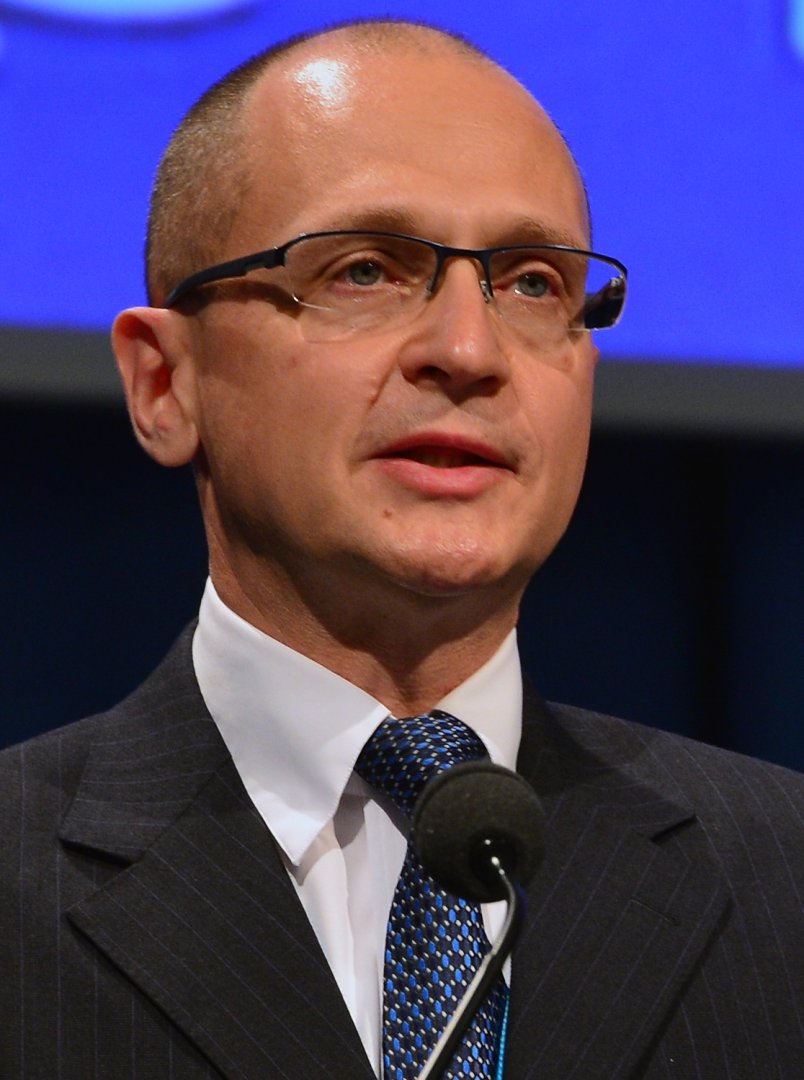
At the center of this web is the Russian Presidential Administration, where Sergei Vladilenovich Kiriyenko, First Deputy Chief of Staff, coordinates strategic narrative lines. This is not a single hacker in a St. Petersburg basement, but a state structure that then delegates execution to specialized entities.
Leaked internal documents reveal the existence of a true "Russian Digital Army" structured like a military organization: ideologists who define narratives, meme creators who translate them into viral content, commentators who invade social media, and bot farm operators who amplify everything through automated accounts.
The figures are staggering: in just the first four months of 2024, the Social Design Agency (SDA) bot farm – one of the main Russian "disinformation factories" – generated over 33.9 million comments and approximately 40,000 multimedia content units. Not occasional propaganda, but industrial production.
The Manipulation Factories
Two companies are at the heart of the operational apparatus: the Social Design Agency and Structura National Technologies. Led respectively by Ilya Andreevich Gambashidze and Nikolay Aleksandrovich Tupikin, these organizations don't just produce false content, but constantly monitor European public debate to identify social fractures to exploit.
Farmers' protests? The SDA produces memes attributing the crisis to sanctions against Russia. Migration tensions? Content linking immigration to EU membership is amplified. Civil rights? Narratives depicting the West as morally decadent spread, contrasting with the "traditional values" defended by Moscow.
Simultaneously, intelligence services maintain control over the most delicate operations. GRU Unit 54777 coordinates networks of "fake local media" and manages propagandists like John Mark Dougan, an American who fled to Russia and runs portals like DC Weekly. The FSB, through its 5th Service, handles the recruitment of influence agents within European parties.
Doppelgänger: When Media Become Weapons
The most sophisticated campaign is called "Doppelgänger". The mechanism is as simple as it is effective: internet domains almost identical to those of authoritative publications are registered. A German citizen searches for Der Spiegel, but through internet traffic manipulation ends up on a perfect clone of the site, where they find articles that seem authentic but actually promote pro-Kremlin narratives.
Der Spiegel, Bild, Le Monde, The Guardian, ANSA have been cloned, even government and NATO sites. Using traffic management software like Keitaro and generative artificial intelligence, content is produced in real-time, adapting to daily news to maximize impact.
The narratives are constant:
- Ukraine is a failed Nazi state
- Sanctions are ineffective and only harm Europe
- Military support for Kyiv will lead to economic catastrophe
- NATO is the aggressor, Russia is defending itself
Simultaneously, the "Portal Kombat" network launched 193 websites simultaneously across Europe, often associated with the "Pravda" brand in various languages. The goal is not to convince users of a single fake news story, but to saturate the information environment until it becomes impossible to distinguish reliable sources from propaganda.
The Local Faces of Propaganda
The effectiveness of the Russian system lies in its ability to be conveyed by European voices acting as cultural intermediaries. People who speak German, French, Italian. People who appear on national talk shows or have social media followings.
Germany: The Priority Target
Germany is the main target of Russian FIMI activities in the EU, and the network is deeply intertwined with Alternative für Deutschland (AfD).
Alina Lipp runs the Telegram channel "Neues aus Russland" with over 180,000 subscribers, daily spreading justifications for the invasion of Ukraine. She was sanctioned by the EU in 2025 for her financial ties to Russian propaganda structures through the "Welcome to Russia" organization.
Thomas Röper, who lives in St. Petersburg, runs the Anti-Spiegel website and collaborates with Lipp. He systematically attacks German mainstream media, calling them "NATO weapons," and promotes conspiracy theories.
Wladimir Sergijenko, an AfD parliamentary assistant, was identified as an FSB agent using Russian funds to influence debate in the Bundestag, going so far as to orchestrate legal actions against arms supplies to Ukraine.
France: The Kremlin's "Twelve Apostles"
The French government has denounced a network of twelve pro-Kremlin agents dedicated to information destabilization.
Xavier Moreau, founder of Stratpol, is a Franco-Russian citizen sanctioned by the EU in 2025. He operates from Moscow as a commentator for RT France and Sputnik, using his strategic analyses to predict Ukraine's collapse.
Christelle Néant, active in the Donbass, runs portals like Donbass Insider, producing content then relayed by broader networks in France.
Politicians like Aymeric Chauprade, Thierry Mariani, and Patricia Chagnon have provided political support, participating in Russian media initiatives and acting as "international observers" in unrecognized referendums.
Italy: Talk Shows as Amplifiers
In Italy, Russian strategy exploits television pluralism to insert pro-Kremlin voices into high-audience programs. International analyses have highlighted how Italy is one of the few European countries to regularly invite Russian propagandists, like Dmitry Kulikov, on live television, often without adequate rebuttal.
Figures like Francesca Donato and Matteo Gazzini have been mentioned for their interactions with the Voice of Europe platform. Networks of small portals and Telegram channels also emerge, using cryptocurrencies and hidden funding to spread disinformation targeted at Generation Z.
Voice of Europe: When Propaganda Becomes Corruption
The Voice of Europe scandal revealed a qualitative leap: the transition from narrative influence to direct corruption of political representatives. Launched by oligarch Viktor Medvedchuk, a close Putin ally, this media served as a hub to secretly finance European parliamentarians in exchange for spreading Russian messages in EU institutions.
Investigations by Czech security services (BIS) revealed that paid politicians were tasked with influencing the 2024 European Parliament elections, promoting narratives against sending aid to Ukraine. Payments, often made in cash or cryptocurrency in Prague, involved members of populist parties in Belgium, France, Netherlands, Germany, and Poland.
Petr Bystron (AfD, Germany) is under investigation for receiving 20,000 euros during meetings with Russian operators in Prague. Thierry Baudet (FvD, Netherlands) is one of the main faces promoted by the platform, despite denying donations. Filip Dewinter (Vlaams Belang, Belgium) and Thierry Mariani (RN, France) are veterans of political support for Kremlin narratives.
This operation demonstrates how Russian propaganda seeks to create a "fifth column" within European parliaments, capable of transforming SDA guidelines into legislative proposals or official speeches.
The Narratives: The West as Enemy
FIMI activities don't limit themselves to individual facts, but construct broad interpretive frameworks aimed at manipulating public perception long-term.
The narrative archetypes are constant:
The West as Aggressor: Russia is presented as victim of an encirclement orchestrated by the United States and NATO. The invasion of Ukraine becomes a necessary defensive measure.
Elite Betrayal: European governments are depicted as Washington puppets acting against their own citizens' interests. Inflation, energy crisis, and deindustrialization are attributed to "suicidal" EU sanctions.
The Nazi Threat in Ukraine: The accusation of "Nazism" against Kyiv serves to dehumanize the adversary, mobilizing support by recalling the World War II victory.
The Moral Decadence of the West: Russian propaganda positions itself as a barrier against moral "decadence," attacking LGBTQ+ rights and inclusion policies to attract conservative sectors of European societies.
New Frontiers: AI and Total War
The use of artificial intelligence has enabled personalization of narratives on a granular scale. The SDA has developed techniques to bypass social media filters, using coded language (e.g., "tr.an.zyt" for transit, "ka.ta.st.rofa" for catastrophe) to avoid automatic detection.
The strategy involves three levels:
- Massive spamming: Creating background noise to distract
- Provocative engagement: Bots pushing users toward cloned sites
- External validation: "Real" politicians and opinion leaders repeat the narratives to close the credibility loop
Increasingly sophisticated tactics emerge:
CopyCop: Language models plagiarize, translate, and rewrite Western media articles, inserting small pro-Kremlin changes before spreading them through fake local news sites.
Matryoshka: Thousands of coordinated verification requests to fact-checkers regarding obviously false content to divert resources from monitoring more dangerous campaigns.
Storm-1516: Production of deepfakes and manipulated videos "laundered" through apparently independent sites before being picked up by official Russian media.
The European Union's Response
The EU has responded through the FIMI Toolbox, based on four pillars:
- Situational Awareness: Constant monitoring through the Rapid Alert System
- Resilience Building: Support for independent journalism and media literacy programs
- Regulation: Implementation of the Digital Services Act to force platforms to remove bot farms
- External Action and Sanctions: Political attribution of campaigns and economic costs to malicious actors
In December 2024 and May 2025, the EU imposed unprecedented sanctions against individuals and companies linked to the Doppelgänger campaign and the SDA, including asset freezes and bans on operating in the European digital market.
A Permanent Threat
The numbers speak clearly: in the first year of the Ukrainian conflict, online platforms allowed Moscow to conduct a campaign reaching an aggregate audience of at least 165 million people in the EU, generating no less than 16 billion views.
We are not facing simple "fake news" dissemination, but a social engineering operation aimed at reconfiguring the belief systems of European populations. The origin is unequivocally state-based, with a supply chain starting from the Kremlin, passing through specialized PR agencies, and arriving in the communication channels of local journalists and commentators.
The integration between generative artificial intelligence and political influence networks represents the most dangerous frontier. The ability to create clones of authoritative media and corrupt elected representatives allows Russia to simultaneously strike the base (citizens) and the top (decision-makers) of liberal democracies.
Defending the European information space cannot ignore a deep understanding of these mechanisms. Transparency on media funding, strengthening foreign lobbying laws, and constant vigilance over digital infrastructures are the necessary prerequisites to guarantee the integrity of democratic processes in an era of permanent hybrid warfare.
Because this is not just disinformation. It is war. And it is fought every day, in every click, in every share, in every television talk show.
Methodological note: This article is based on leaked internal documents from the Social Design Agency, intelligence reports from European security services (BIS, AIVD, DGSI), European Parliament resolutions, EU Council sanctions, and European External Action Service (EEAS) analyses on the FIMI phenomenon in the period 2022-2025.