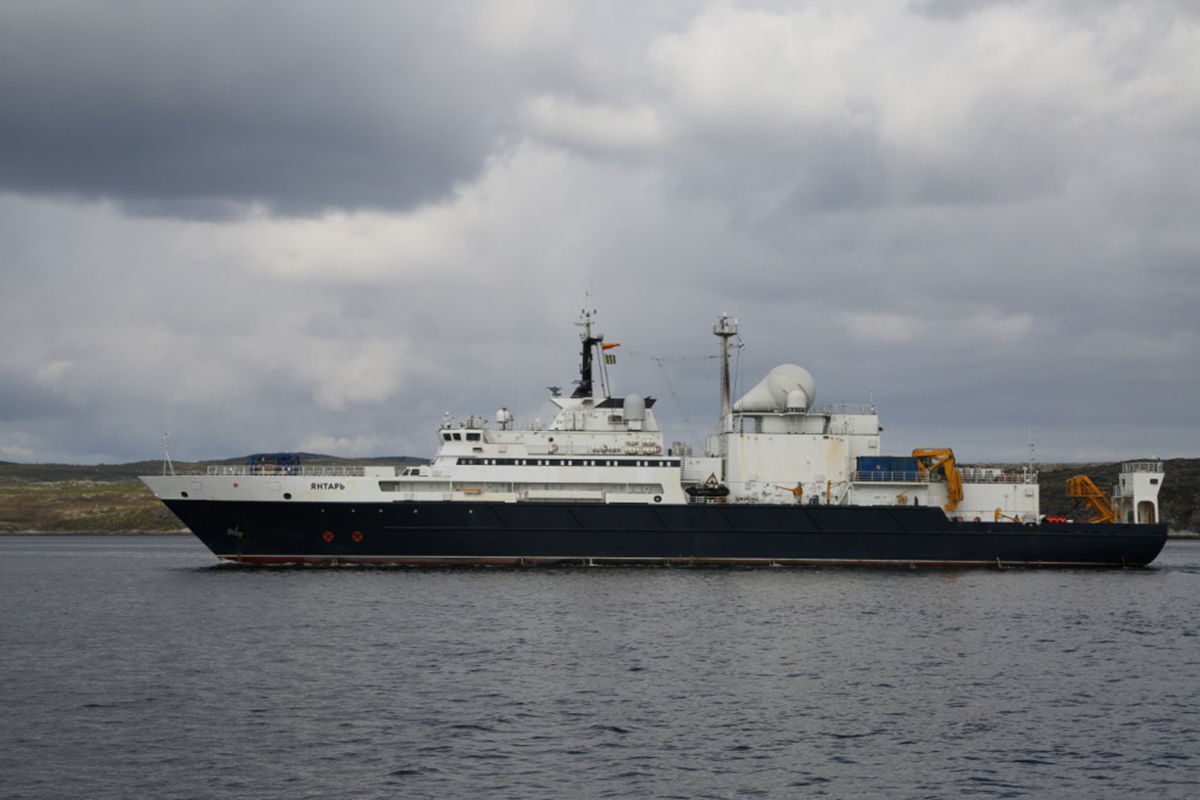
An investigation into the network of European and international companies keeping the Kremlin's shadow fleet operational, circumventing Western sanctions
While the West imposes increasingly stringent sanctions on Russia for its war of aggression against Ukraine, a vast network of companies, financial intermediaries, and maritime service providers continues to ensure the operability of what has become known as the Russian "shadow fleet." This investigation documents how companies based in Dubai, Hong Kong, the Baltic States, and even Greece have built the infrastructure that allows the Kremlin to export billions of dollars worth of oil, thus financing the war machine against Ukraine.
🛰️ OSINT Tool: Monitor the Shadow Fleet in Real Time
Access the Shadow Fleet Monitor →
We have developed an OSINT-based tracking system that allows real-time monitoring of Russian shadow fleet tankers, behavioral anomalies, and ship-to-ship transfers.
The Architecture of the Shadow Fleet
The Russian shadow fleet today comprises between 600 and 1,400 vessels, according to estimates from the Kyiv School of Economics and other monitoring organizations. These ships transport approximately 70% of Russian oil exports, generating estimated revenues between 87 and 100 billion dollars per year — a figure that equals or exceeds the total value of economic and military assistance provided to Ukraine since the war began.
Managing this fleet is not an isolated activity but requires complex infrastructure involving logistics, finance, and maritime services. Each vessel continues to depend on a support network that ensures its daily operability, despite the sanctions regime.
The Ship-to-Ship (STS) Transfer System
The most documented technique for concealing cargo origin is ship-to-ship transfer. Key locations such as the Gulf of Laconia in Greece and waters off Ceuta in Spain have been identified as major hubs for these operations.
The support mechanism involves a Russian tanker transferring oil to an unsanctioned "receiving" vessel. This process requires the presence of a local service provider who supplies fenders, pumping equipment, and specialized technical personnel to manage the open-sea mooring. According to an analysis by the U.S. Naval Institute, STS transfer areas identified in the Mediterranean and Black Sea include the Laconic Gulf, Hurd's Bank near Malta, an area off Ceuta, and suspect zones off the coast.
The Shell Company Network
Dubai: The Center of the System
Documentary support passes through a sophisticated network of management companies based primarily in Dubai, Hong Kong, and Istanbul, but with technical ties in Europe. Investigations conducted by Bloomberg and Western intelligence agencies have revealed that Russian intelligence agencies are responsible for the industrial-scale creation of shell companies in jurisdictions such as Dubai, Hong Kong, and the Seychelles.
Companies sanctioned for managing vessels in the shadow fleet include:
- Voliton DMCC (United Arab Emirates)
- Bellatrix Energy Limited (Hong Kong)
- Covart Energy Limited (Hong Kong)
- Sun Ship Management (Dubai) - Sovcomflot subsidiary
- Matias Ship Management (Dubai)
- Nur Global Shipping (Dubai)
Many of these companies are created specifically to operate one or two vessels, and their nominee directors, as in the case of Nikhil Ganesh Ghorpade (a photojournalist with no maritime experience), lack any expertise in the energy sector. Vessels that previously belonged to Sovcomflot, the Russian state shipping company, have been transferred to companies in the United Arab Emirates to conceal their origin.
The Baltic Case: FB Trade and Fast Bunkering
An investigation conducted by LRT (Lithuanian national broadcaster), 15min, Eesti Ekspress, and Nekā personīga revealed one of the most significant support networks for the shadow fleet, centered in the Baltic States.
The Bunker Vessels: Rina and Zircone
Between June 2024 and March 2025, the bunker (refueling) vessels Rina and Zircone conducted 286 ship-to-ship operations, refueling 177 tankers with oil and petroleum products. Of these, at least 159 had called at Russian ports shortly before or after the transfers.
According to analysis by Anatolii Kravtsev of the Kyiv School of Economics, at the time Rina and Zircone supplied fuel, at least 20 of those tankers showed clear signs of belonging to the Russian shadow fleet: they lacked insurance coverage from any member of the International Group of P&I Clubs, and their owners and management companies were registered outside Oil Price Cap Coalition jurisdictions. Over nearly 10 months, the two vessels refueled them at least 30 times.
The Opaque Ownership Structure
The investigation traced the ownership of Rina and Zircone to FB Trade, a Dubai-registered company. Digging deeper, ultimate ownership leads to Fast Bunkering (Baltic Sea Bunkering), an Estonian company founded by Aleksei Tšulets, one of Estonia's richest men.
Fast Bunkering subsidiaries and other companies linked to Tšulets operate in the ports of Riga and Klaipėda. Entities linked to Tšulets also fully own the port of Paldiski Nord in Estonia. In 2023, Estonian authorities opened an investigation into one of his subsidiaries, NT Bunkering, on suspicion of falsifying documents labeling Russian fuel as Kazakh.
The vessel sale structure was architected through the Latvian company Welton Enterprises SIA, originally registered in 2018 as SIA Rent Flat, then changed to SIA YOLA in 2019 and became FB Shipping in 2023. Despite reporting virtually zero revenues, the company managed to spend a total of 6.3 million euros to purchase the vessels Rina, Zircone, and another NT Bunkering vessel, Onyx.
Shadow Fleet Insurance Coverage
Every vessel requires class certification and insurance to enter certain ports or cross strategic straits. Since the main insurers of the International Group of P&I Clubs are subject to sanctions, the shadow fleet turns to Russian or "friendly" country insurers.
Russian Insurers
A Kyiv School of Economics report identifies the main P&I insurance providers for the shadow fleet:
- Ingosstrakh - sanctioned by USA and UK, considered the most important Russian provider but does not disclose its coverage
- AlfaStrakhovanie - sanctioned by EU, USA, and UK
- VSK - sanctioned by UK for enabling the shadow fleet
- Sogaz - provides coverage with little transparency
These insurers are reinsured by Russian National Reinsurance Co. (RNRC), which depends on the Russian central bank, effectively putting Russia itself on the line for payments. This raises questions about what would happen if something serious occurred off the coast of a country Moscow considers "hostile."
In 2024, only 29.4% of tankers carrying Russian crude and 56.2% of tankers carrying Russian petroleum products had IG (International Group) coverage. This contrasts sharply with vessels carrying only non-Russian cargo, over 90% of which were IG-insured.
Tanker Sales by European Shipowners
An international investigation conducted by Follow the Money, OCCRP, and journalists from over a dozen news organizations revealed that Western shipowners earned over 6.3 billion dollars selling hundreds of obsolete tankers that became part of the shadow fleet.
Greek Dominance
More than half of the tankers identified in the investigation were sold by 54 Greek companies for a total of at least 3.7 billion dollars. Greek shipowners sold 127 of the 230 total vessels identified, representing 55% of all sales investigated worldwide.
Prominent Greek companies involved include:
- Tsakos Energy Navigation - sold the vessel Aris for 21 million dollars, which was then renamed Canis Power and began transporting Russian oil
- Marla Tankers - sold two 15-year-old tankers for 84 million dollars in 2024
- Toro Corp (Cyprus-based) - resold six obsolete tankers for 195.4 million dollars in 2023 and early 2024, earning 111.7 million
- Prime Marine - involved in selling vessels that ended up in the shadow fleet
- Thenamaris - multiple vessels operated by this Athens-based company have been attacked in the Mediterranean
According to Bloomberg data, Greek shipping companies remain the single largest supplier of vessels to the shadow fleet, and Western European operators as a whole provide two-thirds of the shadow fleet's transport capacity. Nearly 60% of vessels were sold by Western European owners, with Greek owners by far the largest single sellers.
Supply and Port Services
Even if a vessel is sanctioned, it needs fuel (bunkering), water, provisions, and medical assistance for the crew. Often refueling occurs via dedicated tankers operating in international waters, avoiding docking at a port where control would be stricter.
A local maritime agency can facilitate crew changes or delivery of mail and documents via small service vessels that reach the ship at the edge of territorial waters. Although international rules allow exceptions for refueling vessels carrying Russian oil, strict legal conditions apply: bunkering companies must conduct thorough checks, maintain transparent documentation, and comply with all legal standards.
Maintenance and Spare Parts
Extraordinary maintenance represents the fleet's weak point. Many Russian vessels use European-made engines, such as Wärtsilä or MAN. Support is guaranteed through the black market or commercial triangulations that see spare parts transit through Central Asian countries before reaching the maintenance port in Russia or a compliant shipyard.
A European company can provide consulting or management software to a foreign counterpart that, formally, appears to be the shadow vessel's shipowner. The use of "front companies" allows purchasing original spare parts from Western manufacturers, declaring a final destination different from the real one.
Quantitative Data on the Shadow Fleet
Conclusions
The effectiveness of the shadow fleet depends entirely on the shipowner's ability to maintain this logistical "lifeline" active. Without technical support for at-sea transfers and the complicity of financial intermediaries, the economic sustainability of such an operation would be drastically reduced.
The evidence documented in this investigation reveals a complex and layered network of actors who, operating on the margins of legality or deliberately exploiting gaps in the sanctions system, allow the Kremlin to continue generating billions in revenues from the oil trade. This logistical machine involves:
- Shell companies registered in Dubai, Hong Kong, and the Seychelles that obscure the true ownership of vessels
- Bunkering service providers in the Baltic States that systematically refuel shadow fleet vessels
- Russian insurers that provide opaque and potentially inadequate coverage
- European shipowners, mainly Greek, who have sold hundreds of obsolete tankers for billions of dollars
- Ship-to-ship transfer operators in international waters that allow masking the origin of oil
As long as this infrastructure continues to operate, the Western sanctions regime will remain partially ineffective, allowing Russia to finance its war of aggression against Ukraine. Only coordinated and determined action by the European Union, the United States, and their allies — striking simultaneously at all nodes of this logistical network — can break the chain of support for the Kremlin's shadow fleet.
Bibliography and Sources
Institutional Documents and Reports
- European Parliament - Russia's Shadow Fleet (2024)
- Kyiv School of Economics - Oil Spill Insurance and the Shadow Fleet (2025)
- CSIS - Ghost Busters: Options for Breaking Russia's Shadow Fleet (2025)
Investigative Reports
- Follow the Money & OCCRP - European Shipowners Keep Russia's Shadow Fleet Afloat (2025)
- LRT Investigation - Baltic Companies Secretly Fuelling Russia's Shadow Fleet (2025)
- EUobserver - How Baltic Firms Secretly Fuel Russia's Shadow Fleet (2025)
- Solomon - Shadow Fleet Secrets: How Greek Tankers Were Used to Transport Russian Oil (2025)
Technical and Sector Analysis
- Maritime Executive - Russia's Shadow Fleet Tactics Exposed (2024)
- DFRLab - Oil Laundering at Sea: Defeating Russia's Shadow Fleet in the Mediterranean (2024)
- Windward - What Is the Shadow Fleet? (2024)
Academic Sources
- Brookings Institution - Where Did Russia's Shadow Fleet Come From? (2025)
- Brookings Institution - The Race to Sanction Russia's Growing Shadow Fleet (2025)
Insurance and Legal Sources
- Lloyd's List - UK Sanctions 30 Ships and Two Russian Insurers (2024)
- Maritime Executive - West P&I: Sanctions on Russian Insurer Could Impede Claims (2024)
- Euromaidan Press - Investigation Reveals Insurers of Russia's Oil Tanker Shadow Fleet (2024)
Intelligence and Security Sources
General News Sources
- CNN Business - A Shadow Fleet Is Helping Russia Ship Oil Around the World (2023)
- Foreign Policy - Greek Ship Sales Help Russia Evade Sanctions (2023)
- Al Jazeera - Rogue Tankers Off Singapore: What Are Shadow Fleets? (2025)
Online Resources and Databases
Document produced December 24, 2025